
Disabled History Is American History
Aug 29, 2026
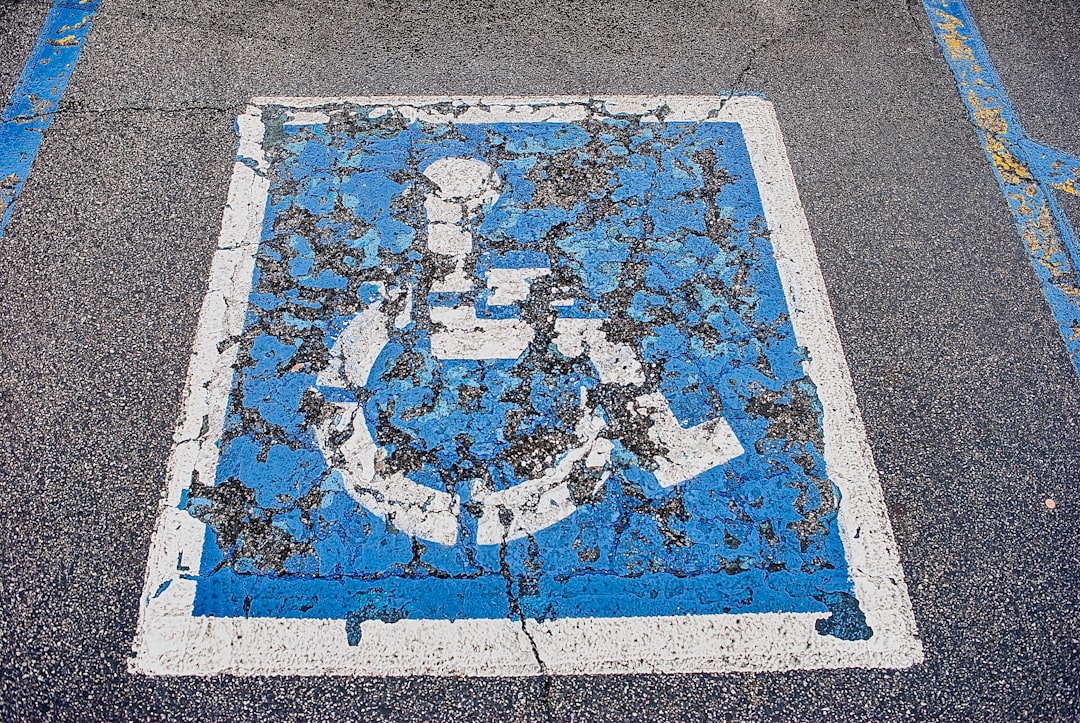
I’ve been carrying around a scrap of an idea for months now, ever since I started digging into the DOJ memo reinterpreting Olmstead. Every time I write about the Conveyor Belt, about how they strip documentation, then housing, then freedom from one group at a time, I keep circling back to the same thought: this isn’t a new machine. It’s an old one. Disabled people have been watching this machine operate on us since before most of these other fights had names.
So let’s talk about how we got here. Because none of it was handed to us. And then let’s talk about what we built while we were fighting for it.
1867: The Beginning of “Unsightly”
Start here, because most people don’t know it exists. On July 9, 1867, the San Francisco Board of Supervisors passed Order No. 873, banning anyone “diseased, maimed, mutilated, or in any way deformed” from appearing in public. Fines. Jail. Both, if the city felt like it. [1]
History remembers these as the Ugly Laws. That name tells you exactly whose side the law was on. It wasn’t disabled people who were ugly. It was the idea that we should be hidden.
These laws spread across the country and stayed on the books for over a century, disproportionately targeting disabled people and reinforcing the idea that disability should be hidden rather than accepted. [1]
I bring this up now because the current Secretary of Health and Human Services, Robert F. Kennedy Jr., has spent 2025 telling the country that autism is a modern epidemic, that autistic kids will never hold a job, never write a poem, never go out on a date, never use a toilet unassisted. [17] He talks about autistic people like we are a new problem the country has never faced before, like disabled existence itself is the emergency. Autistic people have always been here. What’s changed is diagnosis, not our presence. [18]
He knows better than that, or he should. His aunt, Rosemary Kennedy, was born with an intellectual disability. In 1941, when she was 23, her father, Joseph Kennedy Sr., had her lobotomized without even telling her mother beforehand, because he was afraid of what an unconforming daughter would do to the family’s political future. The lobotomy left her permanently disabled in a new and devastating way. She was hidden in a Wisconsin institution for the next six decades, her name barely spoken by the family that erased her. [19] That’s not ancient history either. That’s this man’s own family, doing to a disabled woman exactly what the Ugly Laws did to disabled people in public: deciding we’re an embarrassment to be managed out of sight. He’s not asking a new question. He’s asking the oldest one there is, and dressing it up as science.
1973: A Promise With No Teeth
The Rehabilitation Act passed in 1973, and Section 504 of it became the first federal civil rights law to prohibit disability discrimination in any program receiving federal funding. [2] On paper, that’s a landmark.
In practice, the federal government simply refused to sign the regulations that would enforce it. Years went by. A law nobody enforces isn’t protection. It’s a promise, and promises don’t keep anyone out of jail or into a building.
1974: The Last Arrest
The last known arrest under an Ugly Law happened in 1974 in Omaha, Nebraska, one year after the Rehabilitation Act became federal law. That same year, Chicago finally repealed its own ordinance. [1]
Sit with that timeline for a second. The federal government said discrimination was illegal in 1973. A city was still jailing a disabled person for existing in public in 1974. That gap between what’s written and what’s enforced is the whole story, and it’s a gap I don’t think has ever fully closed.
1975: A Right to Learn
The Education for All Handicapped Children Act guaranteed disabled kids the right to a free public education, now known as IDEA. [9]
1977: The Sit-In
By 1977, disabled activists had waited long enough for the 504 regulations to be signed. Judy Heumann, Kitty Cone, and Mary Jane Owen led a group of over 100 people into the federal HEW building in San Francisco. They occupied the fourth floor and refused to leave. [3][4]
A note on the numbers: you’ll see this occupation cited as lasting 25, 26, or 28 days depending on the source. The Smithsonian dates it April 5 to April 30, 1977 (25 days); other primary accounts, including organizer Kitty Cone’s own retelling, cite 28 days; Wikipedia and several academic sources land on 26. I’m citing it here as “nearly a month” rather than picking a single number I can’t fully verify. [3][4][5][6][7]
What’s not in dispute: it was the longest nonviolent occupation of a federal building in U.S. history, and it wasn’t just disabled activists inside that building. The Black Panther Party brought food. Corbett O’Toole, who was there, later said plainly that the Panthers saved the sit-in. [8] Labor unions and faith leaders sent supplies. This is a detail I never want cut from this story, because it’s the same lesson I keep coming back to in my own organizing: nobody wins these fights solo. The coalition is the strategy.
On April 28, 1977, HEW Secretary Joseph Califano signed the 504 regulations, unchanged. [3][4]
1978: We Will Ride
The sit-in forced enforcement of Section 504, but enforcement on paper still didn’t mean a disabled person could get on a city bus. In Denver, nineteen wheelchair users, most of them former nursing home and institution residents who’d only recently gotten free, surrounded two city buses on July 5, 1978, and refused to move. [20]
They stayed in the street through the night, some of them sleeping on the pavement, chanting “We will ride.” Police didn’t know what to do with them, because the same inaccessibility that kept them off buses also kept them out of patrol cars, jails, and courtrooms. [20] Denver’s transit authority eventually agreed to make its buses wheelchair accessible, and by the mid-1980s Denver had one of the first fully accessible local bus systems in the country. The Gang of 19, as they came to be known, went on to found ADAPT, which spent the next decade taking the same tactic to cities across the country. [20]
The Decade That Followed
Once enforcement existed, the built infrastructure of protection came fast:
1986, the Air Carrier Access Act stopped airlines from turning disabled passengers away. [9]
1988, the Fair Housing Amendments Act extended federal housing protection to disabled people, including the right to reasonable accommodation. [9]
1990, the Americans with Disabilities Act became law. Employment, transportation, government services, businesses, public accommodations, all of it, finally covered under one landmark civil rights law. [9]
1999: Olmstead
The Supreme Court ruled in Olmstead v. L.C. that unnecessary institutionalization of disabled people is itself a form of discrimination. People have a right to live in the most integrated setting appropriate to their needs. [9] Not the setting that’s cheapest for the state. Not the setting that’s easiest to warehouse people in. The most integrated one.
I want you to hold onto that ruling, because it matters for what’s happening right now. There’s a DOJ Office of Legal Counsel memo currently reinterpreting the Olmstead integration mandate, and I’ve been tracking it alongside the same for-profit detention data I use when I write about CoreCivic and GEO Group. The machine that profits from institutionalizing people doesn’t care whether the person it’s institutionalizing is disabled, undocumented, or unhoused. It cares that there’s a bed to fill and a contract to bill.
2008 brought the ADA Amendments Act, broadening the definition of disability and reaffirming what 1990 had already promised. [9]
They Built the World You’re Standing In
Here’s the piece nobody tells you when they’re teaching this history as a list of laws and lawsuits: disabled people didn’t just fight for the right to exist in public. They were already shaping the world while doing it, in science, music, art, politics, everywhere. The Conveyor Belt only works if you can convince people the group it’s targeting is a drain, a burden, a problem to be managed. So let’s look at who we’re actually talking about.

Science:
Stephen Hawking was diagnosed with ALS at 21 and spent the following five decades rewriting our understanding of black holes and the origins of the universe. [22]
Louis Braille lost his sight at age three after an accident with his father’s tools. By 15, in 1824, he had developed the six-dot tactile reading system that gave literacy to blind people worldwide. [10] He was a teenager. Think about that the next time someone tells you disabled kids can’t be trusted to know what they need.
Temple Grandin was diagnosed with autism at age two, at a time when doctors were telling her mother to institutionalize her. Her mother refused. Grandin went on to become one of the most influential animal scientists in the world, designing the curved-chute cattle handling systems now used in roughly half of all cattle facilities in North America, because she could see and think the way the animals did in a way most neurotypical designers couldn’t. She’s spent decades since as one of the most visible autism self-advocates in the country, pushing back against exactly the kind of “kids who will never hold a job” rhetoric coming out of Washington right now. [21]

Power and Leadership:
This is the category people resist the most, because we’ve been trained to picture disability and power as opposites. History says otherwise, even when history had to lie about it to make that happen.
Franklin D. Roosevelt contracted polio in 1921 at age 39 and was permanently paralyzed from the waist down. [12] He led the country through the Depression and World War II from a wheelchair the public was rarely allowed to see, at a time when disabled people were routinely institutionalized and hidden from public life.
John F. Kennedy is not someone most of us think of as disabled, and that’s exactly the point. He was diagnosed with Addison’s disease, a rare adrenal disorder, at 30, in 1947, after nearly dying on a trip to London and receiving last rites. He would receive last rites twice more before becoming president. [23] Addison’s meets the modern legal definition of a disability under the ADA, a chronic condition that substantially limits major life activities, in his case the adrenal system’s ability to regulate hormones, blood pressure, and the body’s response to stress. [24] His campaign denied the diagnosis outright when reporters and his 1960 opponent, Lyndon Johnson, raised suspicions about his health. He kept himself alive on implanted steroid pellets, then daily oral steroids, testosterone, and a rotating cocktail of other medications, for the rest of his life, and the country didn’t find out the full truth until his autopsy. [23] He ran the country from inside a body he wasn’t allowed to let anyone see clearly, in an era when the truth might have ended his career before it started.
Harriet Tubman survived a traumatic brain injury around age 12, when an overseer threw a two-pound weight that struck her in the head and fractured her skull. She lived the rest of her life with seizures, debilitating headaches, and trance-like episodes that some modern neurologists believe resembled narcolepsy or temporal lobe epilepsy. [11] She used the visions that came with it to guide the Underground Railroad. Her disability isn’t a footnote to that story. It’s part of how she navigated it.
And this isn’t only history.
Tammy Duckworth is a sitting United States Senator right now. She lost both legs and partial use of her right arm when the Black Hawk helicopter she was co-piloting was hit by an RPG in Iraq in 2004. [25] She’s the first woman with a disability ever elected to the House and then the Senate, and in 2017 she personally led the fight in the Senate to kill a bill that would have gutted ADA enforcement. [25] We didn’t just build the world in the past tense. We’re still doing it, in the Senate chamber, right now.
Music:
Beethoven began losing his hearing in his late twenties and was functionally deaf by the time he composed his Ninth Symphony.
Stevie Wonder has been blind since shortly after birth and became one of the most prolific and celebrated musicians popular music has ever produced.
Itzhak Perlman survived polio as a child and became one of the defining violinists and conductors of the 20th century, performing seated, on his own terms, in a field that wasn’t built for that.
Art:
Chuck Close built a career on massive, photorealistic portraits, grid by grid. On December 7, 1988, a spinal artery collapse left him paralyzed from the neck down. Through rehabilitation he regained some movement and kept painting with a brush strapped to his wrist and forearm. [13] He didn’t stop being an artist when his body changed. He changed how the art got made.
I learned about Close in high school art class, long before I knew anything else about him, and his work stuck with me. I remember studying the way he broke a face down into a grid of small abstract shapes that only resolved into a person from a distance, and doing my own projects inspired by that technique. Learning that he’d built himself a way to keep painting after his body stopped cooperating with the way he used to paint meant something to me even then, years before I understood how much I’d need that lesson myself. [13]
I need to be honest about the rest of it too. Close was accused by several women of sexual harassment starting in 2017, conduct he acknowledged in part. [13] That’s not something I’m going to soften or leave out. What he did to those women wasn’t okay, and I don’t excuse it. But I can hold that truth in one hand and still hold what his adaptive process taught me in the other. The technique he engineered, the proof that a body can be forced to renegotiate its relationship with a craft and the craft can still survive that renegotiation, that part is still true and still worth passing on, separate from the man.
I haven’t picked up a paintbrush or a pencil in years now. My own disabilities took that from me the same slow, uneven way his took his hands, not all at once, just enough to make the old way of doing it impossible. I’m still figuring out what my version of the wrist-strap is. I don’t have an answer yet. But I know it exists, because people before me have had to find theirs too.
Writers and Activists:
Helen Keller lost her sight and hearing in infancy and became the first deaf-blind person to earn a bachelor’s degree, then spent her life organizing for disability rights, women’s suffrage, and labor rights, refusing to be the polite, quiet symbol people wanted her to be.
Judy Heumann contracted polio at 18 months and used a wheelchair for the rest of her life. Denied a teaching license in New York because officials called her a “fire hazard,” she sued and became the first wheelchair user to teach in New York public schools. [14] She co-led the 504 sit-in, then went on to help drive the ADA into law. She’s remembered as the Mother of the Disability Rights Movement, and she died on March 4, 2023. [14][15] If you read the earlier sections of this piece and wondered who was leading the room, it was her.
Screen and Technology:
Marlee Matlin won an Academy Award and spent her career forcing Hollywood to make room for deaf performers, on screen and off.
Vint Cerf, co-creator of the TCP/IP protocols that make the internet function, has worn hearing aids since age 13 and has moderate hearing loss. [16] He’s spent decades pushing for captioning, accessible video conferencing, and inclusive design, work he traces directly back to his own experience navigating a hearing world.
Why I’m Telling You This Now
None of these rights arrived because someone in power woke up and decided disabled people deserved dignity. Every date on this timeline exists because someone refused to leave a building, filed a lawsuit, or simply kept living in public when the law said they weren’t allowed to. And every name in that second list built something the world now depends on, disabled the entire time, not in spite of it.
That’s the pattern I keep finding underneath every piece I write, whether I’m covering ICE enforcement, manufactured housing seizures, or DOJ memos rewriting decades-old civil rights rulings. Declare a problem. Strip the paperwork. Strip the housing. Then strip the freedom. The Ugly Laws did it to disabled people in public space. The Conveyor Belt is doing it to migrants, to trans people, to unhoused people, to disabled people right now, using the same basic architecture.
Progress isn’t a permanent state. It’s a maintenance project. Every generation inherits the responsibility to protect what got fought for and to keep expanding it, because the moment we treat these rights as settled is the moment somebody starts quietly writing the memo that unsettles them.
We didn’t get here by accident. We’re not going to stay here by accident either.

Sources
[1] “Ugly laws,” public ordinances against disabled people in public, including San Francisco Order No. 873 (July 9, 1867); last known arrest, Omaha, Nebraska, 1974; Chicago repeal, 1974.
[2] Section 504 of the Rehabilitation Act of 1973.
[3] Smithsonian National Museum of American History, “Sitting-in for disability rights: The Section 504 protests of the 1970s,” americanhistory.si.edu. Cites 25-day sit-in, April 1977, ending in Califano signing regulations April 28.
[4] Zinn Education Project, “April 28, 1977: Disability Rights Sit-Ins Force Enactment of Section 504,” citing organizer Kitty Cone’s account of a 28-day sit-in, zinnedproject.org.
[5] Disability Rights Florida, “Disability History: The 1977 504 Sit-In,” disabilityrightsflorida.org.
[6] Longmore Institute on Disability / FoundSF, “Patient No More: 1977 Occupation of Federal Offices in San Francisco,” citing a 26-day occupation.
[7] Wikipedia, “504 Sit-in,” citing organizers Judith Heumann, Kitty Cone, and Mary Jane Owen; occupation dated April 5 to May 4, 1977 (25 days) per this source.
[8] Disability Social History Project, “The 504 Protests and the Black Panther Party,” disabilityhistory.org, quoting Corbett O’Toole and reproducing Black Panther Party statements of support, April 1977.
[9] Education for All Handicapped Children Act (1975); Air Carrier Access Act (1986); Fair Housing Amendments Act (1988); Americans with Disabilities Act (1990); Olmstead v. L.C., 527 U.S. 581 (1999); ADA Amendments Act (2008).
[10] Library of Congress, “Louis Braille: His Legacy and Influence”; Britannica, “Braille.” Braille lost his sight at age three, developed his six-dot system by age 15, published in 1829.
[11] Moody Neuro, “Black History Month: Celebrating Brain Injury Heroes”; Ms. Magazine, “Harriet Tubman’s Disability and Why it Matters” (citing historian Dierdre Cooper Owens). Injury occurred around age 12; lifelong symptoms included seizures, headaches, and trance-like states some modern clinicians associate with narcolepsy or temporal lobe epilepsy.
[12] FDR Presidential Library & Museum, “FDR and Polio”; Britannica, “Franklin D. Roosevelt.” Diagnosed with polio in August 1921 at age 39; permanently paralyzed from the waist down.
[13] Pace Gallery, “Chuck Close”; National Portrait Gallery (UK); ArtForum obituary, 2021. Spinal artery collapse occurred December 7, 1988; sexual harassment allegations date to 2017 and after, per multiple news sources at the time.
[14] Social Security Administration blog, “Remembering Judy Heumann, the Mother of Disability Rights”; Common Dreams, “Judy Heumann, ‘Mother of Disability Rights Movement,’ Dies at 75.”
[15] AERA joint statement on the legacy of Judy Heumann, March 2023.
[16] Google, “Vint Cerf on accessibility, the cello and noisy hearing aids”; Safe’N’Clear, “Meet Dr. Vinton Cerf.” Cerf has worn hearing aids since age 13.
[17] RFK Jr. remarks at an April 16, 2025 HHS press conference and subsequent interviews (“these kids will never pay taxes… never hold a job… never write a poem… never go out on a date… many will never use a toilet unassisted”); also his repeated description of autism as an “epidemic” worse than COVID-19. Sources: ABC News, “RFK Jr. lays out new studies on autism”; Yahoo News/AP, “RFK Jr again claims autism is ‘worse’ than Covid.”
[18] The CDC attributes the rise in autism diagnoses to expanded diagnostic criteria and awareness, not a new “epidemic”; autism was not included in the DSM until 1980, meaning many previously undiagnosed or misdiagnosed people are now being counted. Sources: Autism/Asperger Network (AANE), “Autism is not an ‘epidemic,’ as RFK Jr. suggests”; CBS Minnesota, researcher interviews.
[19] Rosemary Kennedy, born 1918, was the sister of Robert F. Kennedy Sr. and aunt of Robert F. Kennedy Jr. She had an intellectual disability, believed to stem from oxygen deprivation at birth. In November 1941, her father Joseph P. Kennedy Sr. arranged a lobotomy without informing her mother in advance; the procedure left her permanently and more severely disabled. She lived the rest of her life, until her death in 2005, largely out of public view in a Wisconsin institution. Sources: Wikipedia, “Rosemary Kennedy”; Compact Magazine, “Postmodern Lobotomy Blues”; Post News Group op-ed, “Rosemary Kennedy: Challenging RFK Jr.’s Views on Autism.”
[20] The “Gang of 19” surrounded and blockaded two Denver city buses on July 5, 1978, for approximately two days, demanding wheelchair-accessible buses; the group later founded ADAPT (American Disabled for Accessible Public Transit), which spread similar bus protests to other cities through the 1980s, including a 1984 Chicago ADAPT protest against a purchase of inaccessible buses. Sources: NPR, “In 1978, they stopped buses, and helped launch a disability rights movement”; CPNRI, “How a Bus Protest Changed Disability Rights”; Wikipedia, “ADAPT”; 19th News, “How Rosa Parks played a role in influencing the disability rights movement.”
[21] Temple Grandin, born 1947, was diagnosed with autism at age two; doctors recommended institutionalization, which her mother refused. Grandin earned a PhD in Animal Science from the University of Illinois (1989) and designed cattle-handling systems, based on her visual, animal-oriented thinking, that are now used in roughly half of North American cattle facilities. She has spent decades as a public autism self-advocate and professor at Colorado State University. Sources: Cold Spring Harbor Laboratory bio; Autism History Project (University of Oregon); EBSCO Research Starters biography.
[22] Hawking’s name appears in the 2024 unsealed Epstein/Maxwell court documents; a 2015 Epstein email discusses countering an accuser’s claim that Hawking took part in an “underage orgy” on Epstein’s island. No criminal charge or substantiated evidence of misconduct exists, and Hawking’s family has publicly denied any wrongdoing. Sources: Newsweek, “Stephen Hawking Allegations in Jeffrey Epstein Documents”; Yahoo News, “What the unsealed Jeffrey Epstein documents say, and don’t say, about Stephen Hawking”; Gulf News, family statement, 2024.
[23] JFK was diagnosed with Addison’s disease in London in 1947 at age 30, after a health crisis serious enough that he received last rites; he received last rites at least twice more in his life. His campaign publicly denied he had Addison’s during the 1960 election. He was treated with DOCA hormone pellets and later oral steroids for the rest of his life. His autopsy confirmed autoimmune polyendocrine syndrome type 2, of which Addison’s is a component. Sources: The Philadelphia Inquirer, “Pain and last rites for John F. Kennedy”; doctorzebra.com, “Denying Addison Disease”; CBC, “Under the Influence.”
[24] Addison’s disease as a qualifying disability under the ADA’s definition of a chronic condition substantially limiting a major life activity (endocrine function). Source: U.S. Equal Employment Opportunity Commission ADA guidance on chronic conditions.
[25] Tammy Duckworth lost both legs and partial use of her right arm when her Black Hawk helicopter was hit by an RPG in Iraq on November 12, 2004. She is the first woman with a disability elected to the U.S. House and later the U.S. Senate. In 2017 and 2018, she led opposition among Senate Democrats to H.R. 620, a bill that would have weakened ADA enforcement. Sources: Deque/axe-con speaker bio; Enabling Devices, “Senator Tammy Duckworth: An Advocate for Disability and Veteran’s Rights.”
Cross-reference: Conveyor Belt Part 2 (DOJ-OLC Olmstead memo); Doom Loop (for-profit detention, CoreCivic/GEO Group).