
History has a pattern, and it isn’t subtle once you know what you’re looking for. Governments don’t build a cage for one group and leave it that size forever. They build it, they test it, they see how much the public will tolerate, and then they widen it.
I keep thinking about women being thrown into asylums by their husbands. Not because they were dangerous. Because they were too smart, too outspoken, or simply in the way of an affair or an inheritance. “Hysteria” was never a real diagnosis. It was a legal loophole, and asylums were where you put a woman you’d decided didn’t get to have an opinion anymore.
Elizabeth Packard is the name attached to exactly that story. In 1860, her husband — an Illinois Calvinist minister — had her committed for the crime of disagreeing with him publicly: on religion, on women’s rights, on slavery. Illinois law at the time let a husband commit his wife without her consent or a trial.¹ She spent three years inside before winning her freedom in a hearing that took the jury seven minutes. Afterward, she founded the Anti-Insane Asylum Society and spent decades successfully lobbying multiple states for laws requiring due process before anyone could be committed.² Two decades later, a young journalist named Nellie Bly faked her way into New York’s Women’s Lunatic Asylum to report from inside it, and found the wards full of women who weren’t sick at all — some committed for defying men, others simply immigrants who didn’t speak enough English to protest their own sanity.³ The same institution swallowing outspoken women was already swallowing immigrants who couldn’t talk their way out. That’s not a coincidence I’m willing to file away as historical trivia.
It went further than confinement. In 1927, the Supreme Court ruled in Buck v. Bell that the state could forcibly sterilize people it deemed unfit — a decision that opened the door to roughly 65,000 forced sterilizations in the US over the following decades.⁴ The eugenics programs behind those numbers disproportionately targeted women and girls labeled “feebleminded” or “promiscuous,” and disabled people confined to the same institutions.⁵ Two different groups, one machine, one legal ruling doing the work for both.
Rosemary Kennedy is what that machine looked like inside one of America’s most powerful families. Joseph Kennedy’s eldest daughter showed developmental delays as a child and, by her early twenties, was described by her family as increasingly difficult to manage. Some historians and clinicians now believe she may have been on the autism spectrum or otherwise neurodivergent by today’s understanding — nothing more dangerous than a young woman who didn’t fit the mold her father had built for his family’s image.⁶ In 1941, without telling his wife, Joseph Kennedy had 23-year-old Rosemary lobotomized. It left her permanently incapacitated, unable to speak clearly or walk unassisted. She was institutionalized for the rest of her life, and the family hid what had happened to her for twenty years.⁷ She wasn’t dangerous. She was inconvenient to an image. That’s the same sentence that describes Elizabeth Packard, and it’s not a coincidence that it fits both a minister’s wife in 1860 and a president’s sister in 1941.
It took until 1999 — Olmstead v. L.C. — for the Supreme Court to even establish that unjustified institutionalization of disabled people violates the ADA.⁸ That’s not ancient history. That’s within a lot of our parents’ lifetimes.
Disabled people have their own long, brutal history with the same tool — not treatment, warehousing. Removed from families and communities because they were classified as a burden instead of a person.
Those aren’t separate stories. They’re the same mechanism, used on different people, whenever it was convenient to make someone disappear without calling it what it was. And I don’t think that mechanism is done. I think women will be a group that joins the disabled in institutions again, if and when that time comes. Nothing about this moment tells me the tool got retired. It just went looking for its next use.
The machine has several intake doors right now
Immigrants — legal, in-process, undocumented, doesn’t matter — are the target getting built out fastest. Detention capacity is expanding, due process is the first casualty, and I laid out the money behind it in The Doom Loop: the private equity firms already buying up nursing homes with a fixed ten-year return timeline, the OLC memo quietly gutting the Olmstead integration mandate, the HUD memo pulling ESA protections. Different intake doors, same machine, same investors circling.
But detention was never going to stay sized for immigrants alone. Watch the rhetoric, because rhetoric is always the first move, and this administration found its next door in “antifa.”
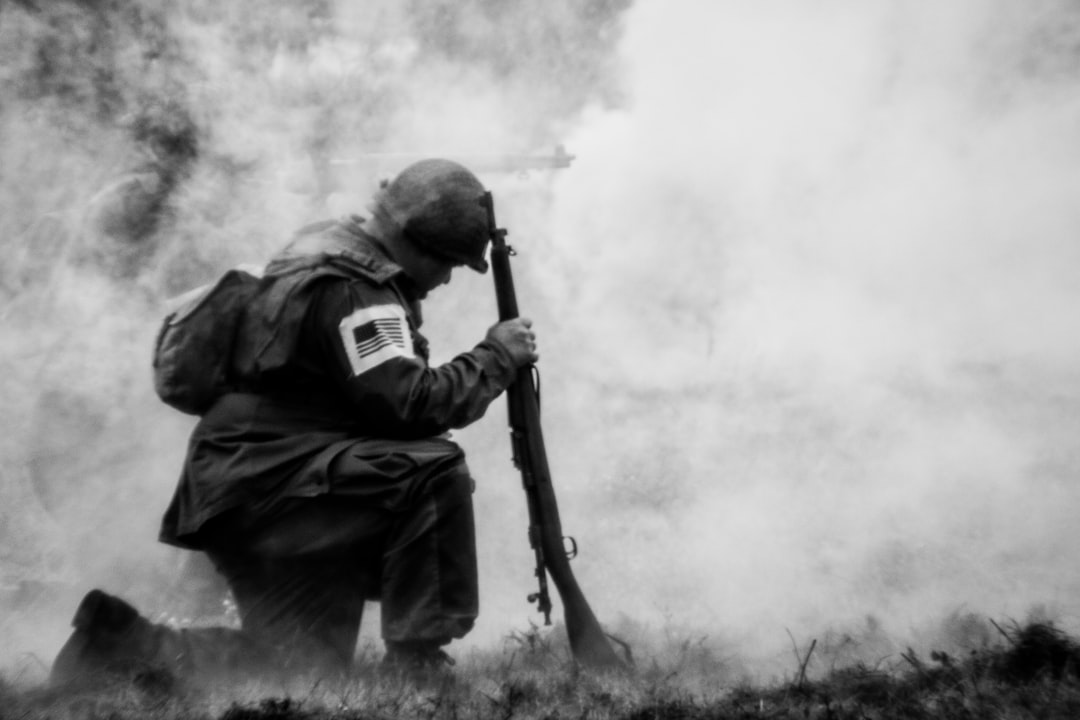
Antifa is not a group. It’s the family business.
Here’s what gets lost every time that word gets thrown around: antifa is short for anti-fascist. That’s the whole thing. Not a militia, not a membership roster, not a cell structure. A position. And it used to be the least controversial position in America. I know anti-fascists. Some of them stormed the beaches of Normandy. Our grandfathers put their lives down in the sand to end fascism, and we built monuments to them for it. If you’re not anti-fascist, there isn’t a neutral third box to stand in. There’s only pro-fascist, whether or not anyone’s willing to say that part out loud.
We’ve been here before, mechanically, not just in spirit. I wrote about the history of these exact tropes in Same Hate, New Target, and I dug into how quickly a party can slide from countercultural rebellion to authoritarian sympathy in Fascism v. MAGA — the parallels there are ones I can’t unsee. They never start with the worst of it. They start with paperwork, with smaller groups, with rhetoric built to test what the public will tolerate before the real escalation. “They’re eating the dogs and cats.” “They’re coming for your children and your wives.” Recycled tropes, dusted off and pointed at whichever group is currently useful to fear. This administration didn’t invent the playbook. It’s running it on the groups the base was already softened up to hate.
The legal architecture for the antifa door was built months before anyone was sentenced under it. In September 2025, the administration signed an executive order designating antifa a “domestic terrorist organization,” describing it in the order’s own language as a “militarist, anarchist enterprise.”⁹ Not a group — an enterprise. That word lets prosecutors treat a decentralized, leaderless idea as if it were a criminal organization with members, funding, and a chain of command, even when none of that exists.
That word choice is doing enormous work. Once a shared idea can legally be an “enterprise,” ordinary things people do for each other stop being ordinary. Using an encrypted messaging app. Participating in mutual aid. Letting a demonstrator crash on your couch after a rough night. Donating to a bail fund. None of it is illegal. All of it can now be pointed to as circumstantial evidence that you’re part of the enterprise — which is how you take sweeping federal conspiracy charges and aim them at a decentralized network of local organizers who’ve never met each other, the way it happened to the anti-ICE demonstrators in Minnesota. The Brennan Center for Justice has been blunt about where this leads: build a domestic terror framework around a political idea instead of an actual organization, and you cast a deliberately wide net that chills ordinary political expression along with it.¹⁰ Sharing a post online. Feeding people at a demonstration. Any of it becomes “material support” to an enemy the government gets to define for itself.
We have run this exact experiment before. In 1919 and 1920, after a small number of anarchists actually did plant bombs, the Department of Justice used that as pretext to arrest more than 10,000 people — labor organizers, immigrants, leftists — for nothing more than holding anarchist or socialist views. Thousands of non-citizens were deported with no due process, based entirely on who they associated with and what they believed.¹¹ The Palmer Raids didn’t stay contained to the handful of people who’d actually done something violent. They swallowed a decade of dissent. The blueprint hasn’t changed since: find a real but decentralized idea, exaggerate it into a unified national threat, then pass something broad enough that routine speech, mutual aid, and everyday association count as evidence of conspiracy. It worked in 1920. It’s working again now, just with an executive order instead of a wartime statute and detention centers instead of the Buford.
Here’s what they’d rather you forget while they’re building that case: mutual aid across movements isn’t evidence of a conspiracy. It’s the reason anything has ever gotten better. In 1977, disabled activists occupied the San Francisco HEW building for nearly a month — the 504 Sit-in, the protest that forced the government to finally enforce the first federal disability civil rights law. The government cut their phone lines trying to starve the occupation out.¹² It didn’t work, partly because the Black Panther Party showed up every day with hot meals for the people inside. Judy Heumann, who organized the sit-in, said plainly afterward that it wouldn’t have succeeded without the Panthers’ daily support.¹³ That’s what solidarity between movements actually looks like — not a chain of command, just people who don’t share a single identity showing up for each other because the same machine threatens all of them through different doors. The 504 Sit-in won. The ADA exists in part because of it. If the “material support” framework being built right now had existed in 1977, feeding those protesters for a month would have been exhibit A.
And we’ve already watched the antifa door open
In Texas, eight people were sentenced this June to as much as 100 years in federal prison for a demonstration outside the Prairieland Detention Center in Alvarado.¹⁴ A former Marine reservist got the full hundred years. Others got 50, 60, 70 years — for a nighttime demonstration, fireworks, and one act of violence that prosecutors pinned on the whole group under a terrorism statute never before used this way on American soil.¹⁵ One defendant, Maricela Rueda, was sentenced to 70 years, in part for asking her husband to move boxes containing zines.¹⁶ A box of zines. Decades of someone’s life, in part, for paper. Legal observers are already saying the quiet part out loud: this sets precedent. Once “material support to terrorism” can be applied to a demonstration with no organizational ties, no centralized group, no membership card — it can be applied to any demonstration the government wants to shut down. Not just immigration. Any of it.
And people are cheering it. Openly. While federal agents kill US citizens in the streets and face zero accountability for it. Renee Good was shot and killed by federal agents in Minneapolis on January 7. Alex Pretti was shot and killed by federal agents in the same city seventeen days later.¹⁷ Both were American citizens. Six people total have died at the hands of ICE agents or in their custody with headline-worthy names attached, and not one agent has been charged. Zero. Not “under investigation.” Zero.
On July 4, hundreds of people in Minneapolis marched almost two miles carrying cardboard coffins — 51 of them, one for every confirmed death in ICE custody or by ICE’s hand — from the site of the killings to the federal courthouse.¹⁸ They wore black. The coffins were the message. Fifty-one is what we know, and it won’t stay accurate for long. On June 2, ICE’s acting director quietly issued Directive 11003.7, rescinding the requirement to report deaths that happen within 30 days of someone’s release from custody.¹⁹ Release someone sick enough, and their death simply doesn’t count anymore. DHS called it “common sense.” Advocates call it what it is: a way to keep the body count low on paper while it keeps climbing in fact. We will not know the real number until long after this is over, and that delay is not an accident. It’s the design, same as everything else in this piece.
This was never just about one group
That’s the piece I need people to sit with. The detention centers being built and staffed and funded right now are not sized for immigrants alone. The legal precedent being set in Texas is not going to stay contained to antifa. We are seeing this in real time with the “Red Scare” 2.0, pointing their fingers and yelling “Communist”. The dismantling of disability services and the quiet consolidation of nursing homes under investors is not separate from any of this — it’s the same logic applied to people who are inconvenient to a system that no longer wants to pay to keep them alive with dignity.
Women got institutionalized for being too outspoken once. Disabled people got warehoused for being a burden once. Immigrants are being detained and demonstrators are being handed life sentences right now. The infrastructure being built today doesn’t have a group’s name carved into the door. It has room for whoever gets classified as a threat next, and that classification has always been political, never fixed.
White America has largely gotten to watch this from a safe distance so far. That distance is not permanent. It was never permanent for anyone. Every group this has ever been used on thought they were the exception, right up until they weren’t.
So I’m asking the question directly
Will you be next?
Not you specifically, maybe. But someone you know. Someone who demonstrates. Someone who’s disabled and depends on services that are being cut. Someone who’s outspoken in a way that makes the wrong person uncomfortable. Someone whose care facility just got bought by a company more interested in the real estate than the residents.
The machine doesn’t need your name on a list to come for you. It just needs a door wide enough, and a public quiet enough to let it stay open.
I’d rather be loud.

Related reading
If you want to go deeper on any single thread of this piece: The Conveyor Belt lays out the criminalization pipeline this piece builds on — declare a group a problem, strip documentation, remove housing stability, detain. Conveyor Belt Part 2 expands it with the DOJ memo and detention-for-profit parallels. The Doom Loop covers the nursing home and disability side of this in full. Same Hate, New Target traces the century-long history of the rhetoric doing the desensitizing work right now. And Fascism v. MAGA looks at the specific pipeline from countercultural identity into authoritarian sympathy — the parallels I can’t unsee.

Sources & Footnotes
¹ Elizabeth Packard’s 1860 commitment by her husband under Illinois law. jurist.org ² Packard’s founding of the Anti-Insane Asylum Society and subsequent Personal Liberty Law reforms. nationalwomenshistorymuseum.org ³ Nellie Bly’s 1887 undercover investigation of the Women’s Lunatic Asylum, Ten Days in a Mad-House. loc.gov ⁴ Buck v. Bell (1927) and the resulting ~65,000 forced sterilizations in the US. pbs.org ⁵ Eugenics-era sterilization programs disproportionately targeting women and girls labeled “feebleminded” or “promiscuous.” americanprogress.org ⁶ Historical and clinical speculation on Rosemary Kennedy’s neurodivergence/possible autism spectrum status. blogs.uoregon.edu (Autism History Project) ⁷ Rosemary Kennedy’s 1941 lobotomy, ordered by her father without her mother’s knowledge, and her subsequent institutionalization. en.wikipedia.org ⁸ Olmstead v. L.C. (1999) and its establishment that unjustified institutionalization violates the ADA. chcs.org ⁹ September 2025 executive order designating antifa a “domestic terrorist organization” and “militarist, anarchist enterprise.” whitehouse.gov ¹⁰ Brennan Center for Justice analysis on the chilling effect of applying domestic terror frameworks to political ideologies. brennancenter.org ¹¹ The 1919–1920 Palmer Raids: mass arrests and deportations of anarchists, labor organizers, and leftists. thebaffler.com ¹² The 1977 Section 504 Sit-in at the San Francisco HEW building, including the government’s phone line cut. Disability Social History Project; Crip Camp: A Disability Revolution (Netflix, 2020) ¹³ Judy Heumann on the Black Panther Party’s daily support of the 504 Sit-in. Disability Social History Project; Crip Camp: A Disability Revolution (Netflix, 2020) ¹⁴ Sentencing of eight defendants in the Prairieland Detention Center case, June 2026. washingtonpost.com ¹⁵ Sentencing details, including Benjamin Song’s 100-year sentence and terrorism statute application. cnn.com, democracynow.org ¹⁶ Maricela Rueda’s 70-year sentence, including the zine-related obstruction charge. democracynow.org ¹⁷ Shootings of Renee Good (January 7) and Alex Pretti (January 24) by federal agents in Minneapolis. en.wikipedia.org (Operation Metro Surge) ¹⁸ July 4, 2026 mass funeral march in Minneapolis for the 51 confirmed ICE-related deaths. eyesonice.substack.com ¹⁹ ICE Directive 11003.7 (June 2, 2026) rescinding post-release death reporting requirements. aila.org, washingtonpost.com