
How ICE Became a Housing Tool
Aug 08, 2026
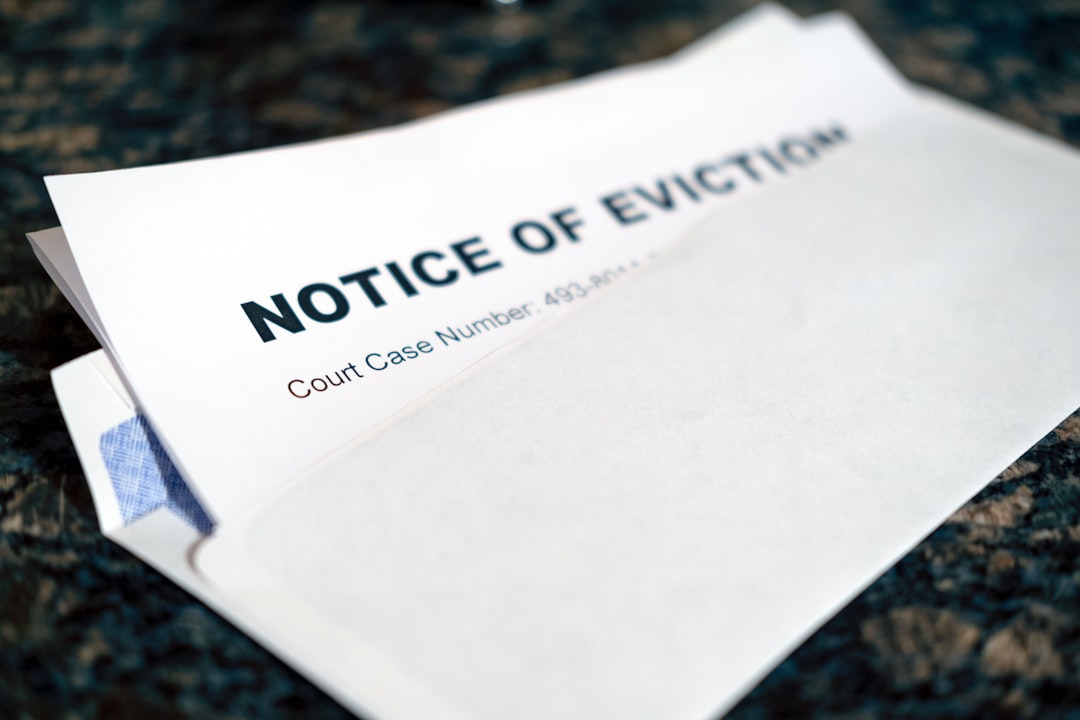
I watched federal agents clear an apartment complex like it was a war zone. Zip ties on whole families. Kids marched out into the street. Black Hawk helicopter overhead, the kind of thing you see in footage from somewhere else, not somewhere you live.
And the thing that kept nagging at me afterward wasn’t just the horror of it, though that was plenty. It was the shape of it. I’d seen this shape before. Not this exact scene, but this exact function — force clearing people out of housing fast, dressed up as something else, so that whoever’s left holding the building doesn’t have to go through the slow, visible, legally accountable process of doing it themselves.
My first thought, watching it happen, wasn’t just about the politics of immigration at all. It was: who owns that building, and what do they get out of this. This felt too familiar, just with different packaging.
I kept thinking about New York in the 80s. Tycoons buying up apartment buildings, finding ways to push tenants out, flipping the units for people who could pay triple. I kept thinking further back than that, to Central Park — a name that gets used like it just occurred, like it was always going to be a park. It wasn’t. Before it was Central Park, it was Seneca Village, a community of about 225 people, roughly two-thirds Black, the rest mostly Irish, one of the first and largest communities of Black property owners in New York City. Three churches, two schools, three cemeteries. A real place. Land ownership meant something more than shelter there too — in New York at the time, it also meant the right to vote. The city took the land by eminent domain in 1857, after two years of residents fighting police sent to remove them.¹ ² The papers helped, the way they always help. Politicians and press started calling the villages “shantytowns” and the people in them “squatters” and “vagabonds” before the removal ever happened.³ Delegitimize with language first. The clearing looks like cleanup instead of what it is.
I’ve written before about how this works — I traced a hundred years of it in Same Hate, New Target, back when “they’re eating the dogs and cats” got dusted off and pointed at Haitian immigrants in Ohio and I recognized the trope immediately, because I’d already heard it aimed at Chinese immigrants growing up. That’s the tell I watch for now. Any time I see “villainized” or “dehumanizing” language wrapped around a group or a situation, I ask the same question: who’s trying to gain something by making these people sound less like people. Because it’s never the person hearing the rhetoric who benefits. It’s whoever needed the room, the vote, the land, or the building cleared. “Squatters” and “vagabonds” did that work in 1857. “Unlawfully occupying” did the same work in 2025. Different century, same con.
That’s the throughline. That’s always been the throughline. You don’t have to burn a place down or drag people out at gunpoint every time. Sometimes you just stop fixing what’s broken and let the market do the rest — that’s what happened to New York’s single-room-occupancy hotels, the cheapest rung of housing in the whole city. Roughly 200,000 SRO units existed at midcentury. Fewer than 40,000 are left today.⁴ Landlords used tax incentives and plain neglect to empty them out, then flipped the buildings once the tenants who couldn’t fight back were gone. The city didn’t even try to stop it with a law until 1985, and courts struck that law down in 1989.⁵
And sometimes it’s not neglect, it’s arson. In the South Bronx through the 70s and into the 80s, landlords in Black and Puerto Rican neighborhoods bought up cheap tenements, cut every corner, then torched their own buildings for the insurance money once the rent stopped being worth collecting. Between 1970 and 1981, the Bronx lost roughly one in five housing units to abandonment and fire. About 250,000 people were displaced.⁶ The press and politicians blamed “urban decay.” Senator Moynihan famously said people wouldn’t burn down the housing they wanted to keep. Investigators later traced the fires to hired torches and an insurance pipeline running from the Bronx to Florida to Lloyd’s of London.⁷ A Bronx DA put it about as plainly as it can be put: take the profit out of arson and the fires stop.
I don’t think the tool ever got retired. I think it just went looking for its next name.
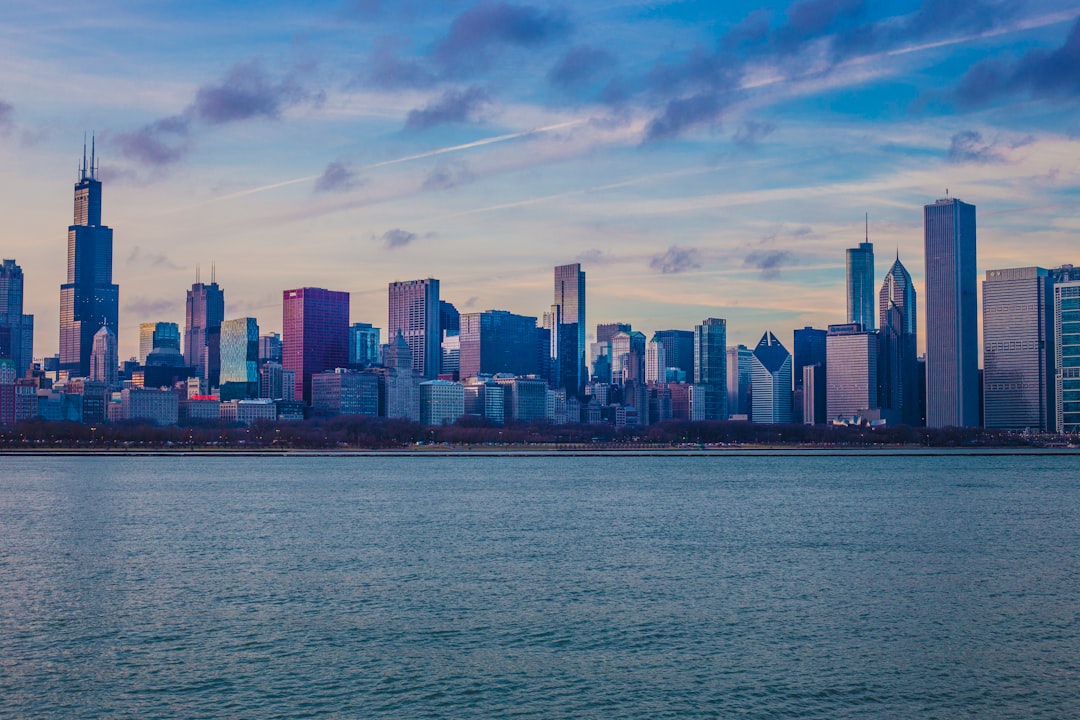
Here’s what it’s calling itself now
On September 30, 2025, roughly 300 federal agents — ICE and the FBI — raided a five-story, 130-unit apartment building at 7500 S. South Shore Drive in Chicago’s South Shore neighborhood. Midnight. Black Hawk helicopter. Flashbang grenades. Battering rams through doors that didn’t need them. Residents, including children, some of them US citizens, were zip-tied and marched into the street in whatever they’d been sleeping in.⁸ Thirty-seven people were arrested. Not one has ever been charged with a crime.⁹ DHS said the target was the Venezuelan gang Tren de Aragua. That claim was never backed by evidence anyone has produced.
Here’s what was backed by evidence: newly surfaced federal court filings, reported by NPR and ProPublica in February 2026, show DHS’s own internal arrest records never mention a gang at all. The stated basis for the operation was intelligence that there were, in the government’s language, “illegal aliens unlawfully occupying apartments in the building.” And the raid itself was carried out, according to those same records, “as a result of the building’s owner/manager’s verbal and written consent.”¹⁰ ¹¹
Read that again. Not a warrant. Not gang intelligence. Landlord permission. A civil occupancy dispute — the kind that’s supposed to go through housing court, not federal court, and never through 300 armed agents and a helicopter — became the pretext for one of the most militarized immigration raids the city had seen. A National Immigrant Justice Center attorney called it among the most brazen unconstitutional uses of force he’d witnessed in his career, and made the obvious point that the federal government has no legal authority to enforce a landlord-tenant occupancy dispute in the first place.¹² When reporters asked DHS directly about the discrepancy, its spokesperson didn’t answer. She pointed back to the two men the agency says were confirmed gang members and called everything else “limited information.”
So who wanted those tenants gone badly enough to open the door to a raid like that?
The building was owned by Trinity Flood, a Wisconsin-based investor, through an entity called 7500 Shore A LLC. Flood bought the building as part of an $18.4 million, three-property portfolio in early 2020 — 60% more than the previous owner, DAX Real Estate, had paid for the same properties just two years earlier.¹³ By 2025, the building had failed fourteen straight annual city inspections.¹⁴ The City of Chicago sued Flood’s LLCs that February over more than fifteen building code violations. And Flood had financed the whole portfolio with a commercial mortgage-backed securities loan — the kind where your mortgage gets bundled and sold off as bonds to investors who’ve never seen the building and never will. When the payments and the insurance lapsed, Wells Fargo, acting as trustee for those bondholders, filed a $27 million foreclosure suit.¹⁵ The raid happened the same week a judge was weighing whether to strip Flood of control entirely.
Property management was handled by a firm called Strength in Management, run by Corey Oliver. Oliver also sits on the board of the Neighborhood Building Owners Alliance PAC, a political action committee that funnels landlord money into Chicago City Council races. Illinois campaign finance records, reported by the Chicago Sun-Times, show that PAC gave money to more than a dozen council members in recent years — including $500 in 2023 to Ald. Greg Mitchell, whose ward covers the very building that would later be raided, and $500 this year to a fund tied to Walter Burnett, the mayor’s pick to run the Chicago Housing Authority.¹⁶ Oliver’s own company also gave directly to a sitting member of Congress. The PAC’s stated agenda: block strict tenant protections, secure landlord-friendly property tax relief, loosen restrictions on the kind of construction that turns cheap units into pricier ones.¹⁷ The property manager overseeing a building failing inspection after inspection was, at the same time, funding the political apparatus responsible for making him fix it.
Within hours of the raid, workers hired by building management were reportedly throwing tenants’ belongings in the trash and clearing out vacated units — now a formal allegation in a state discrimination charge, not just a resident’s account.¹⁸ By December, a Cook County judge ordered the last remaining tenants out, citing gas leaks and non-functioning heat and electricity, denying a request for more time because, in her words, it would be inhumane not to relocate people as quickly as possible.¹⁹ A court-appointed receiver, Friedman Communities, executed the shutdown and handed departing tenants $7,500 checks as they turned in their keys.²⁰
The building’s most recent county-assessed value was under $3 million. It is now listed for sale, bundled with two other South Shore properties, for more than $15 million — marketed around the neighborhood’s rising desirability and its proximity to the Obama Presidential Center.²¹
A building assessed at under $3 million, emptied by a federal raid carried out with the landlord’s written consent, is now on the market for five times that. That gap is the whole essay in one fact.
It isn’t just Chicago
By early 2026, industry reporting on the multifamily housing market was tracking the same pattern nationally. Apartment vacancies were rising fastest in immigrant-heavy submarkets across Texas, Florida, Arizona, and Southern California — and the properties absorbing the worst of it were disproportionately older, lower-income “Class C” buildings, the same tier South Shore sits in. One industry analyst described the occupancy losses from ICE enforcement as a potential “straw that breaks the camel’s back” for properties already financially distressed.²² Real estate professionals, not immigration advocates, are the ones saying this out loud: enforcement activity and distressed-asset turnover are moving together.
And this is happening inside a legal landscape that keeps rejecting the premise. A Politico analysis published in May 2026 found federal judges — appointed under Republican and Democratic presidents alike — have ruled against the administration’s mandatory detention policy in roughly 90% of cases, about 10,400 losses against 1,200 wins. The reasoning isn’t a dispute over anyone’s immigration status. It’s that people were detained with no real opportunity to challenge their confinement at all.²³ That matters here, because it’s the same story South Shore is telling at a smaller scale: it isn’t the presence of the people that was illegal. It’s the method used against them.
The data on who’s actually being held backs that up further. As of April 2026, roughly 71% of the people in ICE detention nationally — more than 42,000 out of about 60,000 — had no criminal conviction at all. Only about 3 to 5% had a violent conviction.²⁴ Most of what’s being enforced here was never a criminal matter to begin with. Presence without status is a civil infraction. It always has been.
This was never just about immigration status
I don’t think the landlord who let 300 armed agents into that building cared much about immigration policy. I think he had a $27 million foreclosure hanging over his head and a building full of people he couldn’t legally force out fast enough on his own. And I think the federal government handed him a faster option than housing court, dressed it up as counterterrorism, and let the story run for months before anyone with the actual paperwork said otherwise.
That’s the update on the old machine. You don’t need a torch anymore. You don’t need decades of quiet neglect, though that still works too, and it’s still happening in mobile home parks and Class C apartment buildings everywhere the money’s decided a place is worth more empty than occupied. Now you can just make one call, sign one form, and let a federal agency with a helicopter do in one night what used to take years of slow-motion cruelty to accomplish.
The building’s for sale now. Under new numbers, for new tenants, at a price the people who used to live there were never going to be able to pay. That’s not an unintended consequence of the raid. Follow the money and the timeline together and it looks a lot more like the plan working.

Spot the Pattern: A Field Guide
If you want to catch this happening in real time instead of piecing it together after the fact, here’s what I actually look for. This works for immigration raids, but it also works for evictions, “cleanup” operations, park closures, encampment sweeps — any story where force gets used against people who are inconvenient to somebody.
1. Watch the language before the action. “Squatters.” “Vagabonds.” “Illegally occupying.” “Overrun.” “Blight.” Dehumanizing language almost always shows up before the harmful action does, not after. It’s doing setup work — making the removal sound like maintenance instead of violence.
2. Ask who benefits, not just who’s blamed. The group getting blamed is never the group that gains. Someone else always does — a landlord clearing a distressed asset, an investor waiting on a foreclosure, a politician who needed a villain more than he needed a solution. Follow the benefit, not the blame.
3. Check who owns the thing being “cleared.” Property records, court filings, and city code violation histories are public. Before you accept the official story about why force was necessary, look up who owned the building, the land, the business — and whether they were already in financial trouble before the “crisis” showed up to solve it for them.
4. Notice when the stated reason changes after the fact. Gang enforcement, then quietly, months later, internal documents say occupancy dispute. Self-defense, then no video turns up to support it. When the official reason shifts once the cameras and lawyers arrive, the first version was never really about what they said it was about.
5. Look for the recycled trope. If the rhetoric sounds like something you’ve heard aimed at a different group before — “they don’t belong,” “they’re a threat,” “they’re not like us” — it probably is the same trope, just re-pointed. I wrote about that pattern at length in Same Hate, New Target, if you want the century-long version of this same exercise.
Once you start checking these five things, you’ll start doing it automatically. That’s the whole point — I don’t want you to have to wait for someone like me to hand you the receipts every time. I want you to know how to go find them yourself.

Further Reading
The Conveyor Belt 1 & 2 lays out the broader criminalization pipeline this piece is one chapter of — declare a group a problem, strip documentation, remove housing stability, detain.
Low Income Gentrification: The Conveyor Belt Comes Home covers the same mechanism playing out slowly, through neglect and lot-rent hikes, in manufactured home communities.
Nobody’s Exempt / Will You Be Next traces the century-long history of institutions built to make inconvenient people disappear, and connects the current detention buildout to that same lineage. (Coming out Aug. 15th)
Same Hate, New Target breaks down the specific rhetorical playbook at work here — the recycled tropes, the “they’re not like us” language — so you can start catching it in real time, before the next group gets fed through it.

Sources & Footnotes
¹ Seneca Village community size, demographics, and land ownership tied to voting rights under New York law. Central Park Conservancy; NYC Parks Department history of Seneca Village ² Two-year resident resistance and 1857 eminent domain removal of Seneca Village. Central Park Conservancy ³ Contemporary media and political characterization of Seneca Village residents as “squatters” and the settlement as a “shantytown” ahead of removal. Central Park Conservancy; New-York Historical Society ⁴ Decline of NYC single-room-occupancy housing stock from roughly 200,000 to under 40,000 units. NYC Department of Housing Preservation and Development historical data; Furman Center reporting on SRO housing loss ⁵ 1985 SRO conversion law and its 1989 court reversal. NYC Housing Preservation and Development records; contemporaneous NYT coverage of SRO litigation ⁶ South Bronx housing loss to abandonment and arson, 1970–1981, and displacement figures. Bronx historical arson-for-profit reporting; NYC housing loss records of the period ⁷ Insurance-fraud arson pipeline and investigative findings tracing fires to hired “torches.” Contemporaneous Bronx DA reporting; insurance fraud investigative coverage of the era ⁸ September 30, 2025 raid details: agent count, tactics, zip-tied residents including children and citizens. PBS NewsHour; Time Magazine; CNN ⁹ Zero gang-related charges filed against the 37 people arrested. Capitol News Illinois, May 15, 2026 ¹⁰ DHS internal arrest records citing “illegal aliens unlawfully occupying apartments” with no mention of gang activity. NPR, Feb. 6, 2026; ProPublica/Capitol News Illinois, Feb. 8, 2026 ¹¹ Raid executed with the building owner/manager’s “verbal and written consent,” per unsealed arrest records. NPR, Feb. 6, 2026 ¹² National Immigrant Justice Center attorney characterization of the raid’s legality. NPR, Feb. 6, 2026 ¹³ Trinity Flood/7500 Shore A LLC purchase history and portfolio price comparison to prior DAX Real Estate ownership. The Real Deal, Nov. 3, 2025; Crain’s Chicago Business, Jan. 15, 2020 ¹⁴ Building’s record of 14 consecutive failed annual city inspections. City of Chicago code enforcement records, cited in The Real Deal ¹⁵ Wells Fargo’s $27 million CMBS foreclosure suit against Flood entities. The Real Deal, Nov. 3, 2025; WBEZ, Oct. 10, 2025 ¹⁶ Neighborhood Building Owners Alliance PAC contributions to Chicago City Council members, including Ald. Greg Mitchell and a fund tied to Walter Burnett. Chicago Sun-Times, Oct. 23, 2025 ¹⁷ NBOA PAC’s stated legislative priorities. Chicago Sun-Times, Oct. 23, 2025 ¹⁸ Allegations that management-hired workers discarded tenant belongings following the raid, now part of a formal state discrimination charge. Illinois Department of Human Rights, Charge No. 2026CH0843 ¹⁹ Cook County Circuit Court Judge Debra Seaton’s December 2025 relocation order. The Real Deal; Block Club Chicago, Dec. 8–9, 2025 ²⁰ Friedman Communities’ appointment as receiver and distribution of $7,500 relocation payments. Block Club Chicago; WBEZ, Dec. 12, 2025 ²¹ Building’s assessed value versus current $15M+ “Jackson Park Portfolio” sale listing. Cook County Assessor records; commercial real estate listing reporting ²² National pattern of ICE-related occupancy declines concentrated in Class C multifamily housing. Multifamily Dive, Feb. 24, 2026 ²³ Federal judiciary’s approximately 90% rejection rate of the administration’s mandatory detention policy. POLITICO analysis by Kyle Cheney, May 2026 ²⁴ ICE detention population criminal history breakdown. TRAC Reports, data current as of April 4, 2026; Cato Institute, Nov. 24, 2025