
Politics are personal, a continuing series by Miss-Information

I’ve written before about the conveyor belt: declare a group a problem, strip their documentation, remove their housing stability, detain them. I traced it through trans rights, through ICE, through the Niemöller poem and Anne Frank’s diary. I said it wasn’t a metaphor. It was a method.
I didn’t think I’d be adding a new stage to it this fast. But here we are, and this time it’s not someone else’s group. It’s mine. It’s me.
Stage One: Demonize
This spring, HHS Secretary Robert F. Kennedy Jr. and CMS Administrator Dr. Mehmet Oz built a public narrative around chronic illness as a $4.3 trillion drain on the economy. The number went mainstream through a Super Bowl ad — a black-and-white spot featuring Mike Tyson, pointing people to RealFood.gov, where they’d find the claim that 90% of U.S. healthcare spending goes to chronic disease.1 PolitiFact traced that 90% figure back to its source and found it had been misrepresented: the original research measured all healthcare spending on people who happen to have a chronic condition — the majority of Americans — not the cost of treating the conditions themselves. By PolitiFact’s own more conservative modeling, the real figure is closer to 42%.2
This isn’t Kennedy’s first inflated number on this subject. He’s also claimed childhood chronic illness rose from 2% to 66% since his uncle’s presidency and that the rate of chronic disease has multiplied twenty-fold in sixty years — both figures fact-checked and rejected as not making mathematical sense, largely reflecting broader diagnostic categories and better detection rather than an actual disease explosion.3 At his swearing-in, Kennedy said the country has a “weak citizenry” because “sixty percent of our people are sick,” and pledged to do to the agencies he sees as “stealing the health of our children” what DOGE did to USAID — his own uncle’s agency.4
The story they tell is that this burden is lifestyle driven: diet, choices, ultra-processed food. CNN summarized the administration’s posture bluntly: if you’re chronically ill, in Kennedy’s view, it might be your own fault.5
He doesn’t say the word. Nobody in this administration has stood at a podium and called chronically ill people a drain. What he says is softer than that — diet, lifestyle, choices, root causes. But strip the flowery language off the sentence and look at the mechanics of it: a massive cost figure, attributed to a population, attributed to that population’s own decisions. That’s the whole sentence. Cost + this group + their choices caused it. You don’t need the word “drain” for that to be the content of the claim. — a notation I’m making here, not a quote: this is my read of what the framing does, built from his own words, not his own words themselves.
I know the difference between a quote and an inference, and I’m telling you which one this is. The number is his. The “diets and lifestyles” attribution is his. The conclusion that we are a financial burden of our own making is what’s left over once you do the arithmetic on what he actually said.
Notice what that framing does. It doesn’t say “our healthcare system failed people.” It says people failed themselves. The drain isn’t the system that left them without care for a decade. The drain is them.
Stage Two: Defund From Within
You don’t have to repeal a right to gut it. You just have to stop enforcing it.
That’s what just happened with Olmstead v. L.C., the 1999 Supreme Court decision that’s been the floor under community-based disability services for 27 years — the thing standing between your disabled kid and an institution, between a senior and a nursing home they didn’t choose, between a person with a mental health disability and a locked ward. A new Justice Department Office of Legal Counsel opinion claims the Court never actually imposed an “integration mandate” at all — that DOJ’s Civil Rights Division has been enforcing something narrower than what the law required for almost three decades.6
It doesn’t overturn Olmstead. It doesn’t change the statute. The ADA, Section 504, and the integration mandate still technically exist.7 What it does is signal that the federal government may simply stop showing up to enforce it. And under this framework, a state can cut community funding, leave disabled people on a waiting list for years — which almost every state already does — and call that a resource problem instead of discrimination. The mechanism isn’t a ban. It’s an exit.
I want to tell you what Olmstead actually changed, because I watched what came before it in my own family.
My adopted aunt was knocked blind by her biological father. She had to travel all the way to Lansing for school because that was where the school for the blind was — the only one. Not her community. Not her peers. Not the life her sighted siblings got to have close to home, because the system at the time didn’t build for her, it built one place and expected her to get there.
My great cousin was born with cerebral palsy, years before the ADA, years before any of this existed. She had a good mother. A mother who showed up for her and did the best she could with whatever options actually existed. And I think about that framing — the best she could with whatever options actually existed — and what it meant that so many of those options amounted to: this institution, or this one parent, or nothing.
What more could either of them have done with full community integration? With peers around them? With the assumption built into the system that they belonged in it? We don’t get to know. That’s what was taken from them before it was ever named as a taking.
That’s what the OLC opinion is threatening to quietly hand back.
This is the same shape as the MDOT housing rules I’ve been tracking, the same shape as the VA guardianship partnership pulling unhoused veterans into conservatorships, the same shape every single time: don’t fight the right in court, just stop funding the thing that makes the right real.
The HUD memo that dropped this spring follows the exact same blueprint. The Fair Housing Act didn’t change — emotional support animals are still a recognized accommodation in the text of the law. What changed is HUD told its own enforcement staff to stop recognizing them, and tightened what qualifies as a service animal while they were at it. No vote. No hearing. Just an internal instruction to stop showing up.
Red tape is its own kind of wall. Exhaustion is its own kind of enforcement. They don’t need to change the statute if they can make the process impossible enough that people stop trying.
[ for more on what that fight actually costs — my own year-long service dog fight, what the memo means for veterans and housing-insecure disabled people — check out The Doom Loop ]
Stage Three: Database
In April 2025, NIH’s director told staff the agency was building a national disease registry, starting with autism.8 HHS walked it back publicly, called it something else, then confirmed months later that CMS and NIH would link Medicare and Medicaid data — about 36% of the country — starting with autism diagnoses, with plans to expand into other chronic conditions.9 By this spring, Kennedy was telling Congress the databases were built and the studies were already running.10
Autism first. Chronic illness next. That’s not my speculation — that’s the stated design.
The Autistic Self Advocacy Network said it plainly: this administration has repeatedly used eugenic language about disabled people, which makes it an untrustworthy place to build a registry of disabled people.11 Their fear isn’t paranoia. It’s pattern recognition. We’ve watched governments register a population before they isolate it before. The list doesn’t need a stated purpose for the purpose to arrive later.
Stage Four: This Is Where It Stops Being Abstract
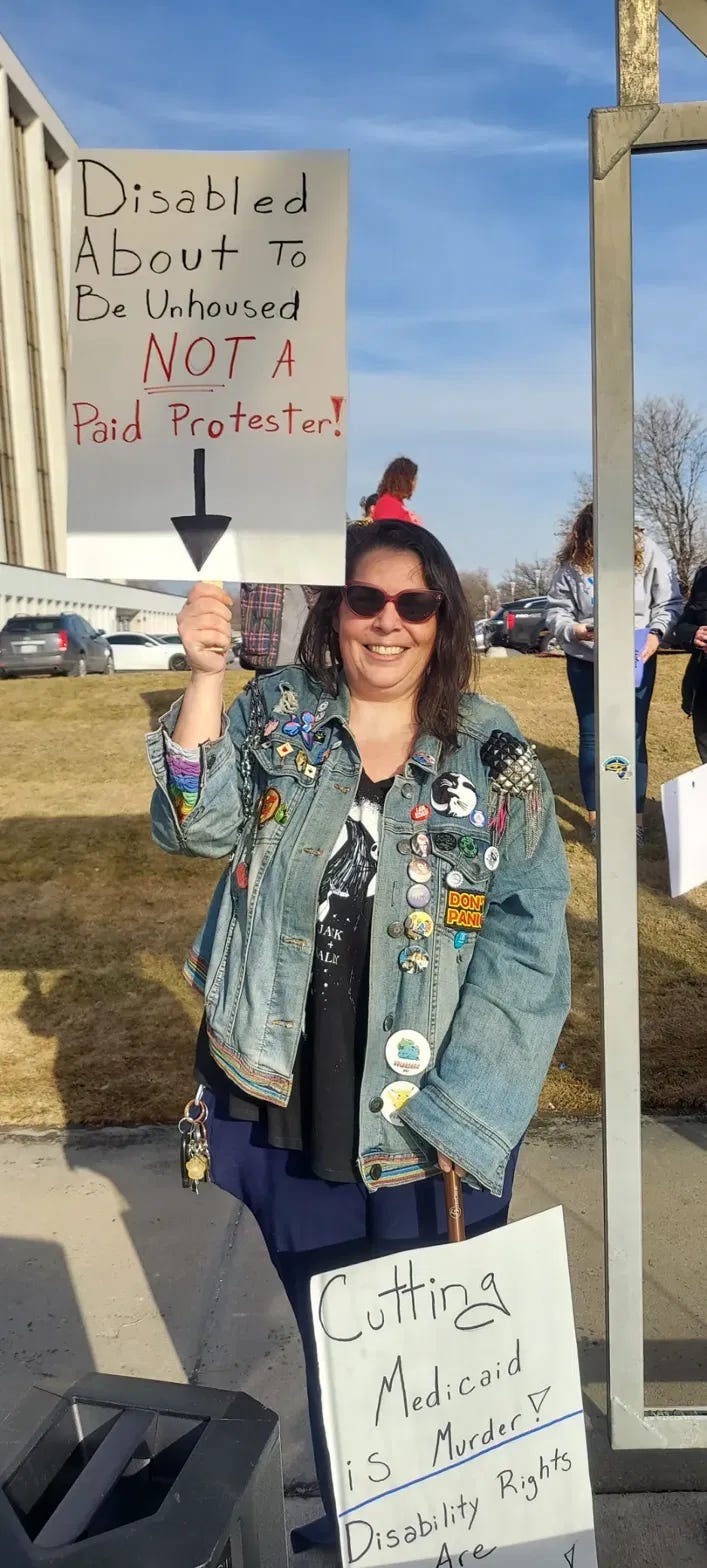
I paid into these systems. That’s not a turn of phrase — that’s payroll tax, that’s how Medicaid and SSDI and SSI are funded. You pay in during the years you can stand, so it’s there in the years you can’t. Calling someone a drain for using what they already paid for is calling them a thief for cashing their own check.
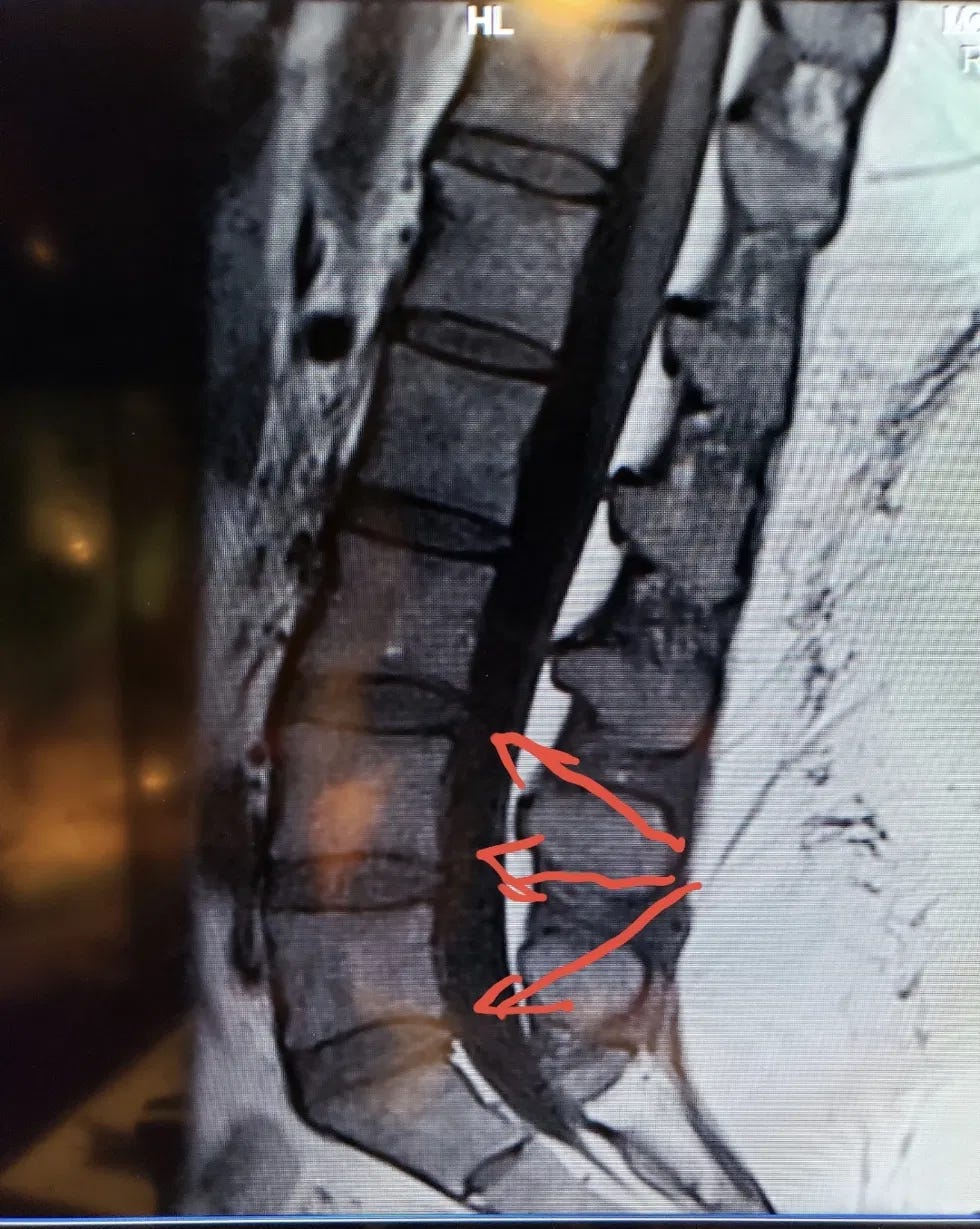
I am not a drain. My diet didn’t do this. My lifestyle didn’t do this.
Four jobs at once because none of them alone paid enough or came with insurance did this. Over a decade without healthcare because dental, vision, and mental health are treated as luxuries in this country did this. Back injuries from a body that had to absorb the work because the system never showed up to share the load — that did this. I have spent years fighting to get approved for the assistance I had already paid for, denied over and over, while the same policies that denied me are the ones now pointed to as proof that “these systems don’t work.”
That’s the part that’s fucking sickening, to use my own words instead of softening them: they built the conditions, they call the outcome a personal failure, and they use my body as evidence for their next move.
The Pattern, Named
Demonize the people the system already failed. Defund the programs from within so the failure gets worse. Point at the worse failure as proof the programs never worked. Database the population under the banner of “root causes.” Then comes the part where rights get classified as case-by-case “resource limitations” instead of discrimination. Vilify, divide, defund, document, detain — every stage looks reasonable in isolation. Every stage is rolled out before the public’s attention has caught up to the last one. That’s the design.
I am watching this happen to disabled people, to autistic people, to the chronically ill, to the unhoused, to veterans under VA guardianship, in real time, while I live it.
You are not imagining the ground shifting. Neither am I.
Disability Pride Month, Anyway
This is Disability Pride Month. I’m writing this in the middle of it, watching the floor get pulled out from under the community it’s supposed to be celebrating. There’s something almost obscene about that timing — except it isn’t a coincidence so much as it is the whole point. They don’t pick quiet months to do this.
I keep coming back to something I’ve heard phrased a dozen different ways over the years, something close to: the disability community is the only community you can join at any time — it just depends on when your time comes. I’m paraphrasing it from memory, not quoting any one person, because I’ve heard versions of it from enough disabled organizers and enough disabled friends that it’s less a quote at this point than a piece of shared knowledge. It’s not a threat. It’s just true. Disability doesn’t check your politics, your income, your diet, or your voting record before it shows up. The people writing policy about us today are one accident, one diagnosis, one bad year away from needing the exact systems they’re dismantling.
So this is still a fight to live, not just a fight to be heard. Disability Pride Month doesn’t pause for the conveyor belt — if anything, it’s the reason I keep tracking it out loud instead of letting it move quietly. We’ve survived institutionalization before. We know what the early stages look like because some of us, or the people who came before us, already lived through the later ones.
If you rely on community-based services, Medicaid waivers, SSDI, or SSI — tell me what you’d lose without them. Call your representatives. Watch for what DOJ does next with Olmstead enforcement. That’s the next station on this belt, and it’s the one that turns “legal opinion” into policy.
This connects to “The Conveyor Belt,” “Criminalizing Shelter,” and “I Called It.”

Footnotes
- WRAL/PolitiFact, “Fact-check: Do chronic illnesses account for 90% of U.S. health care spending?” Feb. 23, 2026. ↩
- PolitiFact, “This chronic illness statistic touted by RFK Jr. and RealFood.gov doesn’t check out,” Feb. 19, 2026. ↩
- The Washington Post, “RFK Jr.’s absurd statistic on the spike in chronic diseases in the U.S.,” April 25, 2025; City Journal, “What RFK Jr. Gets Wrong About Chronic Disease,” April 8, 2025. ↩
- AOL/various wire, “RFK Jr. signals ending the ‘childhood chronic disease epidemic’ will be top priority as HHS secretary,” Feb. 2025. ↩
- CNN, “Chronically ill? In Kennedy’s view, it might be your own fault,” Aug. 5, 2025. ↩
- CBS News, “States aren’t required to provide community-based care for people with disabilities, new DOJ opinion claims,” June 2026. ↩
- The Arc, “DOJ Opinion on Olmstead Threatens the Right of People With Disabilities to Live in the Community,” June 2026. ↩
- Reporting on NIH Director Jay Bhattacharya’s April 2025 staff comments, confirmed by Snopes via CBS News’ original reporting. ↩
- NPR, “RFK Jr. says autism database will use Medicare and Medicaid info,” May 8, 2025. ↩
- CNN, “RFK Jr. seeks to peek at Americans’ medical records for clues on autism and vaccines,” June 4, 2026. ↩
- Truthout, “RFK Jr. Says Autism Database Will Use Medicare and Medicaid Records,” citing Autistic Self Advocacy Network statement, May 9, 2025. ↩