
When “it’s just a camera” stops being an answer
Sep 12, 2026
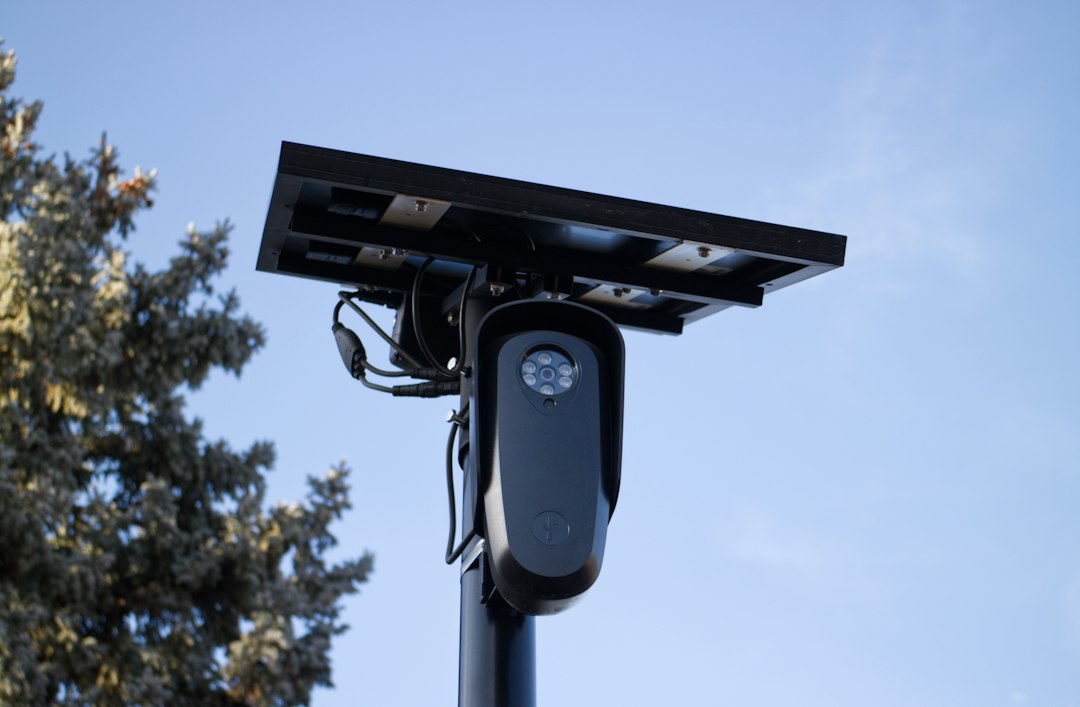
I have an old friend who is now a police officer.
Recently, they made a post about Flock cameras and automated license plate readers. The basic argument was simple. Police aren’t doing anything new. Flock takes a picture of your vehicle, reads your license plate, checks the plate against law enforcement databases, and tells officers whether the vehicle is stolen or wanted for a violent crime. It doesn’t identify the driver. It doesn’t identify the passengers. It doesn’t scan your phone. And according to the argument, this is basically the same thing we’ve been doing for decades with toll roads and red light cameras.
So what’s everyone freaking out about?
That’s actually a fair question, and I think it’s one worth answering honestly. Because I don’t think the problem is that police have cameras. They’ve had cameras for a very long time. The problem is what happens when you take something that used to simply record an event and turn it into something that can remember, search, connect, and analyze an entire population’s movements.
That’s a very different question. And it’s one we should probably be asking before the infrastructure becomes so widespread that we can’t meaningfully answer it anymore.
The Camera Isn’t the Problem
Let’s start with something I think gets lost in this argument. A Flock camera isn’t inherently sinister because it is a camera. Neither is a red light camera, a store’s security camera, a Ring doorbell, or a police body camera.
Cameras can be incredibly useful. If someone steals your car, you don’t need a plate reader to tell you that. You already know exactly which car is missing. What a plate reader can do is pick up the trail after the fact, catching the vehicle at a later intersection and giving police a route, a direction, a last known location. That’s the actual value, and it’s a real one. There is nothing inherently dystopian about recording something that happens in public.
The question changes when we start talking about scale, retention, searchability, and access. Consider the difference between these two sentences:
“A camera recorded your car passing through an intersection.“
versus
“A searchable database knows your car was at that intersection at 8:14 a.m., at the grocery store at 5:37 p.m., outside a medical clinic at 6:12 p.m., and at a political demonstration at 7:04 p.m.“
The camera didn’t necessarily become more powerful. The system around the camera did.
A Red Light Camera Knows You Ran a Red Light
A red light camera generally exists for a narrow purpose. You entered an intersection after the light changed, and the system documents that specific event. A toll system works the same way. That’s still surveillance infrastructure, but it’s built around a single transaction.
An automated license plate reader can operate differently. Instead of asking “did this particular car violate this particular traffic law,” it can ask “where has this vehicle been.” That’s a much bigger question, and it’s the one my friend’s post never actually answers.
“But It Doesn’t Identify the Driver”
This is one of the most technically accurate, and potentially misleading, arguments in the conversation.
Flock doesn’t need to recognize your face to build a record of your movements. It identifies the vehicle. The vehicle has a plate. The plate is tied to a registered owner. And the vehicle can appear repeatedly across different cameras at different times. Nobody needs a photograph of your face for a system to establish a pretty detailed pattern of where your car travels, and by extension, where you travel.
That’s why the privacy question isn’t “does Flock recognize my face.” The more important question is what someone can learn about me by searching the history of my vehicle.
The Difference Between a Camera and a Database
This is where the conversation gets stuck, because we keep comparing today’s surveillance technology to yesterday’s cameras. But the real technological leap isn’t the camera. It’s the database.
A networked ALPR system changes the equation. The information can be captured automatically, converted into searchable data, tagged with time and location, retained, searched later, compared against other databases, shared between agencies, and combined with other surveillance systems. You aren’t just watching what happened. You’re searching history. And once you can search history, you can start reconstructing patterns.

Because Officers Have Already Abused These Systems
This is where “only criminals have anything to worry about” starts falling apart, because this isn’t hypothetical anymore.
In August 2026, a Florida police officer with the Haines City Police Department was arrested after investigators found he had searched his estranged wife’s license plate in his department’s Flock database 717 times between September 2024 and June 2026. He logged reasons like drug investigations and assault offenses to justify the searches. His wife wasn’t connected to any actual investigation.[1]
This isn’t an isolated case. The Institute for Justice maintains an ongoing database of ALPR abuse, including a police chief in one department who resigned after using Flock cameras to track his ex-girlfriend and her new boyfriend more than 200 times, and an officer in Georgia accused of running roughly 600 searches on an ex-partner and her teenage daughter.[2]
If an officer has to physically follow someone, there are limits. They have to get in a car and spend time doing it. A searchable surveillance database removes those limits. Instead of following someone, an officer can just ask the database where a vehicle has been. That’s an enormous difference in capability, and it’s exactly why audit trails and access controls matter.
And Then There’s Reproductive Healthcare
This isn’t a hypothetical either.
In May 2025, a sheriff’s office in Johnson County, Texas used Flock’s national camera network, then roughly 88,000 cameras, to search for the vehicle of a woman who had a self-managed abortion. The search reason logged in the system read, in effect, that she’d had an abortion and they were searching for the vehicle of a woman connected to it. Records later showed the department had opened a death investigation into the pregnancy loss and discussed possible charges with the district attorney’s office the same day, despite officials initially describing the search as a welfare check.[3]
That’s not “the capacity exists to misuse this system.” That’s a documented case, with the search reason logged in Flock’s own system.
The First Amendment Problem
The same logic applies to political activity.
The Electronic Frontier Foundation obtained records covering more than 12 million Flock searches conducted by over 3,900 agencies between December 2024 and October 2025. Within that dataset, agencies logged hundreds of searches tied to political demonstrations, including the 50501 protests, the Hands Off protests, and the No Kings protests.[4]
You may still technically have the right to demonstrate. But if you know a government agency can potentially reconstruct who attended a protest, when they arrived, and where they went afterward, does that change how willing people are to show up? Surveillance can affect constitutional rights without ever producing an arrest. Sometimes the chilling effect happens before anyone gets arrested.
The Human Being Is Still Supposed to Be in the Loop
Technology makes mistakes. Databases contain mistakes. And sometimes those mistakes stack on top of each other.
In August 2020, Aurora, Colorado police swarmed a car containing Brittney Gilliam and four children, ages 6 to 17, after an automated plate reader matched her SUV’s plate to a stolen vehicle on a hotlist. The vehicle actually reported stolen was an out of state motorcycle, not a family SUV, a detail the system never flagged and officers never checked before drawing their weapons and handcuffing children on the pavement. The city settled the resulting lawsuit for $1.9 million in 2024.[5]
The database said stolen. So armed officers responded to a family sitting in a parking lot. That’s automation bias. The machine doesn’t have to be perfect to be dangerous. It only has to be trusted more than it deserves to be trusted.
And this isn’t a 2020 problem that got fixed. In February 2026, a Flock camera in Sherwood, Arkansas misread a single character on a license plate. Officers pulled an innocent couple out of their SUV at gunpoint while their six-week-old baby sat alone in a car seat in the back. One of the officers, uncuffing the couple afterward, told them plainly that the technology isn’t perfect.[8] That same month, an Arkansas city spokesperson would later confirm the culprit was a broken license plate frame partially obscuring one letter.
And it isn’t just misread plates. It’s stale data. In August 2026, a Wisconsin woman named Amber Newell was pulled over on I-94 near Milwaukee with guns drawn after a Flock camera flagged her car as connected to a homicide investigation. Milwaukee police later admitted the alert should have been cleared from the system days earlier and simply wasn’t. She was released, and then stopped again at gunpoint days later, because the same uncleared alert was still live in the system.[9] The camera read her plate correctly both times. The database was just wrong, and nobody had fixed it.
And That’s Why “96% Accurate” Doesn’t End the Conversation
You also have to ask: accurate at what? Reading the plate? Matching the database? Identifying a stolen vehicle? Producing a legitimate investigative lead? Those aren’t the same thing. A camera can accurately read a plate that is inaccurately listed as stolen. A database can accurately return a match that’s completely irrelevant. Accuracy is not the same thing as justice.
ShotSpotter makes the same point from a different angle. It doesn’t record; it interprets sound and generates a police response. A MacArthur Justice Center analysis of more than 40,000 ShotSpotter deployments in Chicago between July 2019 and April 2021 found that 89 percent produced no evidence of a gun related crime, and 86 percent produced no evidence of any crime at all. Chicago’s own Office of Inspector General corroborated the pattern, and the city ended its ShotSpotter contract in 2024.[6] Technical accuracy at classifying a sound is not the same measurement as real world investigative usefulness.
It’s Not Just Plates
Flock and ShotSpotter get most of the headlines, but they’re not the only pieces of this infrastructure, and lumping every surveillance tool together as though they’re interchangeable actually weakens the argument. They’re not identical. They represent different stages of surveillance power.
Fusus works differently than either one. Instead of tracking vehicles or listening for gunfire, it connects privately owned cameras, business security systems, HOA gate cameras, doorbell cameras, straight into a police department’s real-time crime center. Once a business signs on, the feed doesn’t just sit there waiting for a records request. It streams continuously to a police-accessible network, on, all the time, whether or not anything is happening.
Rialto, California found out just how continuous that access actually was. A public records fight there produced a 30,413-page log documenting how often officers accessed private business camera feeds through the city’s Fusus network. In August 2026, comedian John Oliver used that log to criticize the department’s use of privately owned cameras on Last Week Tonight, and the Rialto Police Department publicly pushed back, defending the program on the record.[12] Whatever side of that fight you land on, the exchange confirms the basic fact: a private security camera, once connected to a police real-time crime center, stops being just the business owner’s camera.
Cell-site simulators, commonly known by the brand name Stingray, are a different category entirely, and arguably the most invasive tool in this conversation. A Flock camera or a Fusus feed observes something that’s already happening in public. A Stingray doesn’t wait to observe. It actively impersonates a cell tower, tricking every phone in range, not just a suspect’s phone, into connecting to it and revealing its location and identifying information. There’s no opting out and no way to know it happened. Courts have treated that as meaningfully different from a passive camera picking up whatever passes in front of it. In United States v. Lambis, a federal court in New York held that using a cell-site simulator without a warrant to locate a suspect inside a private residence violated the Fourth Amendment, reasoning that turning someone’s own phone into a tracking device is a search.[13] The Supreme Court’s Carpenter v. United States decision, while about historical cell tower records rather than Stingrays specifically, established that people have a reasonable expectation of privacy in the record of their physical movements, a principle that keeps showing up in later fights over this exact technology.[14]
None of these tools are the same machine wearing a different label. A Flock camera builds a movement history. ShotSpotter generates an alert based on an algorithm’s guess. Fusus turns private cameras into a police network. A Stingray forces every nearby phone to identify itself, whether it belongs to a suspect or not. What connects them isn’t the technology. It’s the same underlying shift, from watching something happen to building a searchable record of everyone nearby, whether or not they did anything at all.
The Real Issue Is Scale
We’ve had cameras for decades. We’ve had police databases for decades. But we’re now living in a world where these things can increasingly be connected, and once they’re connected, the surveillance capability isn’t simply additive. It becomes something different.
One camera tells you something happened. Ten thousand networked cameras can begin telling you where someone goes. Add searchable databases, automatic alerts, artificial intelligence, interagency sharing, and long term retention, and you’re no longer talking about a collection of cameras. You’re talking about infrastructure for observing a population.
Even Flock Knows It
This is the part of the story that arrived while I was writing this piece, and it undercuts the “nothing to see here” argument better than anything I could write myself.
In August 2026, Flock Safety announced it was making several previously optional safeguards mandatory for law enforcement customers by the end of the year: case codes required for every search, mandatory audit assistance that flags unusual search activity and can automatically lock out an account, new controls letting agencies restrict what categories of crime other agencies can search for, and a recommended cut in default data retention from 30 days down to 7.[7] The company made these changes because of documented misuse, not because of theoretical risk.
You don’t have to argue that Flock is secretly capable of anything. The company itself is now acknowledging that access controls, auditing, retention, and misuse are serious enough problems to require new mandatory safeguards.
The Camera Sits Locally. The Data Doesn’t.
This is where “it’s just a local camera” falls apart completely, and I don’t have to look past my own state to prove it.
Michigan’s own Department of Transportation has had a Master Maintenance Memorandum of Understanding with U.S. Border Patrol’s Detroit Sector and Homeland Security Investigations, first signed under the Biden administration, that lets those federal agencies install and operate license plate readers and other surveillance equipment on state highway rights-of-way.[11] In July 2026, fifteen Democratic state lawmakers sent MDOT a letter demanding the department terminate the agreement, arguing that letting Border Patrol and HSI run cameras on state-owned infrastructure violates Michiganders’ First and Fourth Amendment rights. MDOT’s response, as of that letter, was that it was “reviewing” the request. As of this writing, the MOU is still active. Nobody has terminated anything.[11]
Sit with what that actually means. A camera bolted to a pole on a Michigan highway, paid for and maintained through a state agreement, is functioning as a Border Patrol sensor. The road is state property. The data pipeline runs federal. That is the entire argument in miniature: the camera can sit in your town while the system built around it answers to an agency whose job has nothing to do with your town’s traffic safety.
And this isn’t unique to Michigan or to formal MOUs. Communities that adopt Flock specifically to find stolen cars have discovered, after the fact, that outside and federal agencies gained access to their local data anyway, sometimes through the network’s cross-jurisdiction search features rather than any agreement their own city council ever voted on.[4] The pitch to residents is always the same: a camera to catch car thieves. The architecture underneath doesn’t stop at the city line.
Longtime readers will recognize this pattern. It’s the same MDOT thread I traced in “Criminalizing Shelter” and followed up on in “I Called It” and “We Called It“: state infrastructure quietly becoming federal enforcement infrastructure, one MOU at a time. The plate readers aren’t a new chapter. They’re the same conveyor belt, running through a different piece of pavement.
I’ve heard versions of this one too. The UK runs extensive CCTV and its own national automatic number plate recognition network, so why act like American plate readers are some unprecedented dystopia.
Because Britain is actually the stronger argument for my side, not my friend’s. The UK didn’t decide cameras were harmless and leave it at that. It built rules around them. Under the UK’s National ANPR Standards for Policing and Law Enforcement, plate read records on the national system are deleted after 12 months by default, camera accuracy has to be reviewed and logged on a recurring schedule, and access to the national database is restricted to a defined list of approved agencies who have to report back to a national auditor every year on how many cameras they run and how accurate they are.[10]
None of that makes UK-style ANPR harmless. It’s still a system that logs where cars go. But it’s proof that a country can decide “yes, we’re going to network cameras and read plates automatically” and still treat the resulting database as something that needs a defined retention limit, an access list, and an audit trail. Most American departments running Flock have none of those things written into binding policy. The technology isn’t the difference. The governance is.

Answering My Friend Directly
My friend read an earlier version of this argument and pushed back with a couple of points worth taking seriously, because they’re the strongest version of his case, not the weakest.
His first point: We already hand over a massive amount of data to private companies like Meta, Apple, and Google, with far less oversight than government databases have. That’s true, and it’s a real problem. But it’s not the same problem. We can delete our Facebook account. We can leave our phones at home. None of us can opt out of driving on the only road to our parents’ house because Border Patrol has a camera on it. Corporate surveillance is a consent problem. A public road is not optional infrastructure, and a government camera on it isn’t something you can uninstall with the click of a button.
His second point: he says he trusts the government more than he trusts Meta or Tesla, because government databases can be audited and regulated in ways corporate ones aren’t. I’d genuinely like that to be true. But audits and regulations are exactly what this piece has been documenting as missing, not present. Flock only made case codes and mandatory audit flagging standard in August 2026, after years of officers using the system to track exes, after a Texas sheriff’s office logged a search for a woman connected to an abortion, after EFF found thousands of protest-related searches. Those safeguards weren’t already there and being enforced. They got added because they weren’t there, and because people got hurt in the gap.
None of this means my friend is arguing in bad faith, or that police shouldn’t have useful tools. It means the honest disagreement isn’t about whether the camera can read a plate. It’s about whether “trust us” is a policy. Which it clearly can’t be.
Public Safety and Civil Liberties Aren’t Opposites
I don’t want to live in a world where police can’t use technology to find stolen cars or respond to an active shooting. Technology can save lives. That’s precisely why we need to take it seriously, because the answer can’t be “it’s for public safety, therefore we don’t need limits.” If something is powerful enough to materially improve public safety, it’s powerful enough to deserve meaningful rules. We should be able to demand both: use the technology, and put guardrails around it.
So What Should We Actually Be Asking?
Maybe the debate shouldn’t be whether Flock cameras are good or bad. Maybe it should be:
How long is innocent people’s data retained. Who can search it. What counts as a legitimate search reason. Can officers search people they personally know. Can agencies outside the community access it. Can it be used to investigate lawful political activity. What protections exist for people traveling for reproductive healthcare. How are searches audited, who audits them. What happens when an officer abuses the system. What happens when the database is wrong. Who is responsible when an automated alert sends armed officers after an innocent family.
And perhaps most importantly: who watches the people who can search the watchers.
Because that’s the part of this conversation that gets lost when we reduce everything to “it’s just a camera.” It isn’t just a camera anymore. It’s a camera connected to a database. The database is connected to a network. The network is connected to agencies, and the agencies are connected to other agencies. Algorithms are interpreting what the sensors see, and humans are making decisions based on what the machines tell them.
The camera isn’t the point. The system is. And if we’re going to build systems capable of remembering where all of us have been, we should probably decide who gets to remember, and who gets to forget, before we discover we never actually gave ourselves the choice.
Local Update: Eastpointe Pulls the Plug
Eastpointe City Council voted 4-1 to terminate its Flock Safety contract, shutting down 18 license plate reader cameras across the city. The next day, the police department announced that two employees had misused the system, one for personal purposes and the other in violation of policy. The personal-use case brought severe discipline, and the second situation remains under investigation. Eastpointe ends Flock camera contract amid misuse allegations against police staff +2
Note who caught it. The department opened its internal investigations after USA TODAY reporters flagged unusual search activity in audit logs that were made public through records requests. The mayor said he learned about the investigation last month after an inquiry from The Detroit News. The accountability came from outside the department. The Detroit NewsGoogle News
Eastpointe now joins Ferndale, Clawson and Independence Township in ending its relationship with Flock. Police say the cameras helped solve more than 130 violent crimes since 2024. That is the trade-off argument in a nutshell, and the council decided the safeguards weren’t there yet. The Detroit News

What You Can Actually Do About It
If everything above made your stomach drop a little, here’s the part where that turns into something useful. Flock contracts, ALPR ordinances, and MOUs like MDOT’s aren’t handed down from on high. They’re approved by people whose names and phone numbers are public record, and they can be un-approved the same way.
Start local. This is where you have the most leverage.
Most Flock cameras go up because a city council or county commission approved a contract, often with little public debate. Find your city council or county commission meeting schedule and show up, or email, when ALPR or Flock is on the agenda. Ask directly: how long is data retained, who can search it, is it shared outside the department, and is there an annual audit. If your community already has Flock, ask for the public audit log. Several cities have gotten one through a records request.
A script if you’re calling your city council or county commissioner:
“Hi, my name is [name] and I’m a resident of [city/district]. I’m calling about the Flock Safety cameras / ALPR contract. I’d like the council to require public reporting on data retention limits, an outside audit of search logs, and a policy against sharing data with federal immigration agencies before renewing or expanding this contract. Can you tell me who on staff handles this, and when it’s next up for a vote?”
A script if you’re emailing:
“Dear [Council Member/Commissioner name],
I’m writing as a constituent about the Flock Safety / automated license plate reader program in [city/county]. I’m asking you to support three things before any renewal or expansion: a public data retention limit, mandatory outside auditing of search logs with results published, and a binding policy prohibiting data sharing with federal immigration enforcement absent a warrant. I’d appreciate knowing where this stands and how I can follow the process.
Thank you for your time,
[Name and address, so it registers as a constituent]”
State level.
In Michigan, that means your state representative and state senator, specifically about the MDOT/Border Patrol MOU. You can find who represents you at legislature.mi.gov by entering your address. Ask them directly whether they’ve signed onto the letter demanding MDOT terminate the Border Patrol agreement, and if not, why not.
Federal level.
Your U.S. House member and senators can be reached through the Capitol switchboard, but a direct call to their district office tends to get logged and counted faster. Ask where they stand on federal funding or oversight of local ALPR networks and interagency data sharing.
You don’t have to be against every camera to make these calls. You just have to be for a rulebook. That’s the whole piece, put into action.

Footnotes
[1] Haines City, FL Officer Christopher Goodson arrested after 717 searches of estranged wife’s plate, Sept. 2024–June 2026. 10News/WTSP, ABC10, Local12 coverage, August 2026.
[2] Institute for Justice, ongoing documentation of ALPR misuse cases including officer stalking incidents, ij.org.
[3] Johnson County, TX Sheriff’s Office Flock search of woman following self-managed abortion, May 2025. Reported by 404 Media, confirmed via Electronic Frontier Foundation records; summarized by Business & Human Rights Resource Centre.
[4] Electronic Frontier Foundation, “EFF’s Investigations Expose Flock Safety’s Surveillance Abuses: 2025 in Review,” eff.org, Dec. 2025/Jan 2026. Analysis of 12+ million searches, 3,900+ agencies, Dec. 2024–Oct. 2025.
[5] Brittney Gilliam v. City of Aurora settlement, $1.9 million, confirmed Feb. 2024. Electronic Frontier Foundation, AP, NBC News, 9News.
[6] MacArthur Justice Center, ShotSpotter analysis, Chicago, July 2019–April 2021, 40,000+ deployments. Corroborated by Chicago Office of Inspector General. Chicago ended its ShotSpotter contract in 2024.
[7] Flock Safety, “Flock Updates Privacy, Accountability, Security, and Transparency Safeguards,” flocksafety.com/blog, August 2026. Additional coverage via Police1, WRAL, Cox Media Group.
[8] Institute for Justice, “Dozens of Innocent Motorists Have Been Pulled Over, Detained at Gunpoint, or Jailed Due to AI License Plate Camera Errors,” ij.org, July 2026: https://ij.org/dozens-of-innocent-motorists-have-been-pulled-over-detained-at-gunpoint-or-jailed-due-to-ai-license-plate-camera-errors/ — Sherwood, AR incident, February 2026. IJ’s ongoing case database is also at https://ij.org/the-ij-database-of-alpr-abuse/
[9] Amber Newell, Brookfield/Milwaukee, WI, August 2026. Primary reporting via FOX6 Milwaukee and Local 12; also covered by Atlanta Black Star and Yahoo News.
[10] UK Home Office, “National ANPR Standards for Policing and Law Enforcement” (NASPLE), version 3.4, February 2026, gov.uk: https://assets.publishing.service.gov.uk/media/69c25599d588c92c483e4c1f/NASPLE.v3.4.pdf — see also the National ANPR Compliance and Audit Standards, March 2025: https://assets.publishing.service.gov.uk/media/689365e1303b0dad411d4e90/ANPR+Compliance+and+Audit+Standards+3.0+March+2025.pdf
[11] Michigan Advance, “Michigan Democrats call on MDOT to end Border Patrol camera agreement,” July 27, 2026: https://michiganadvance.com/2026/07/27/michigan-democrats-call-on-mdot-to-end-border-patrol-camera-agreement/ Full text of the lawmakers’ letter via Michigan House Democrats: https://housedems.com/letter-to-the-michigan-department-of-transportation/
[12] Rialto, CA Fusus records log (30,413 pages) and John Oliver / Last Week Tonight segment, with Rialto PD public response, reported by New York Post, Aug. 7, 2026. Worth pulling the original HBO segment and Rialto PD’s full statement directly before publication.
[13] United States v. Lambis, 197 F. Supp. 3d 606 (S.D.N.Y. 2016).
[14] Carpenter v. United States, 585 U.S. 296 (2018).