

Politics Are Personal — Miss-Information

They count on something most people never name out loud: effort isn’t infinite.
Not courage. Not will. Energy. A finite, physical resource, and the system knows it runs out, even in people who refuse to quit. That’s not a metaphor. That’s the design. Every form lost in the mail, every fax that “was sent,” every appeal that resets the clock, none of it is incompetence. It’s attrition. And attrition only works on people who eventually run out of fuel.
I’m running low. I’m still here. Let me tell you what the last few months actually looked like.

The Hearing
My case got bumped up by a couple of weeks because I’m unhoused. That’s supposed to sound like mercy. What it actually meant was my lawyer got two extra weeks from the judge to scramble for paperwork that should have been routine months earlier because two of my providers, an urgent care I’d used for years and a physical therapist I’d seen at least once a year since my last back injury at 29, still hadn’t been reached. Not because no one tried. Because I didn’t have the physical energy left over to chase them myself. I was busy deciding what to keep, sell, donate, or give away from an entire life I was tearing down room by room, while grieving two pets I lost in the same stretch of time. My lawyer finally got over 140 pages faxed through. After the hearing.
The hearing itself ran out of time. And in that time, the judge asked me about exactly one thing: my service dog.
Not my spine. Not my diagnoses. Not the years of documentation. Shamrock.
How did I get her. (Donated, through connections from my old training career.) Was she professionally trained. (No — self-trained, the same way I trained my last service dog, using the same education I built a career on.) Why a dog instead of a cane or a walker. (Because mobility aids cause me more pain than they solve.)
I answered all of it thoroughly. I have to believe that means my lawyer asked the right questions, and that the rest got covered somewhere I couldn’t see. I have to believe that, because the alternative is that the only thing the court found worth asking about was the dog — not the body she’s bracing.
Then, because we ran out of time, my lawyer and I were handed a choice that wasn’t really a choice. Either let the vocational expert submit their findings in writing, no further questioning, no hearing — or wait for a second hearing date, months out, in front of an expert we wouldn’t know, who wasn’t there for the hearing. My lawyer had history with the one assigned to my case. She trusted them. The alternative was a stranger, and starting the clock over. So we took the paperwork option, because the other one meant gambling my case on someone we’d never met, for the privilege of waiting even longer.
That’s not a real choice. That’s choosing which risk you’re more willing to live with.

The Cruel Timing
About two weeks after the hearing, I started having spells.
I’d stand up and my vision would narrow to almost nothing. My breath would go shallow and hard to catch. My heart would start pounding while the rest of me drained white, then the shaking would start uncontrollable, full-body. The first time, I made it to a bathroom floor and thought I was going to be sick until enough vision came back to get me to my car. The second time, I was getting dog food for Shamrock. It hit while I was standing in a parking lot, and I had to push through to finish what I came to do, the way I’ve had to push through everything else for years before I learned afterward that this particular condition can cause blackouts, and pushing through is exactly the wrong move.
Shamrock got me back to the car that day. I was lucid enough afterward to film it and call my doctor.
It turned out not to be POTS, which is what I suspected from friends and fibro groups online, it’s autonomic dysfunction, a close relative. A cardiologist confirmed it. More testing is scheduled: a heart ultrasound, a tilt table test (waiting on results).
I joke that I’m collecting chronic illnesses like Pokémon at this point. It’s not really a joke. It’s how I keep from screaming.
And the worst part is the timing. None of this existed yet when it could have mattered, when it could have been entered into the record, asked about, weighed. It showed up right on schedule to be too late.
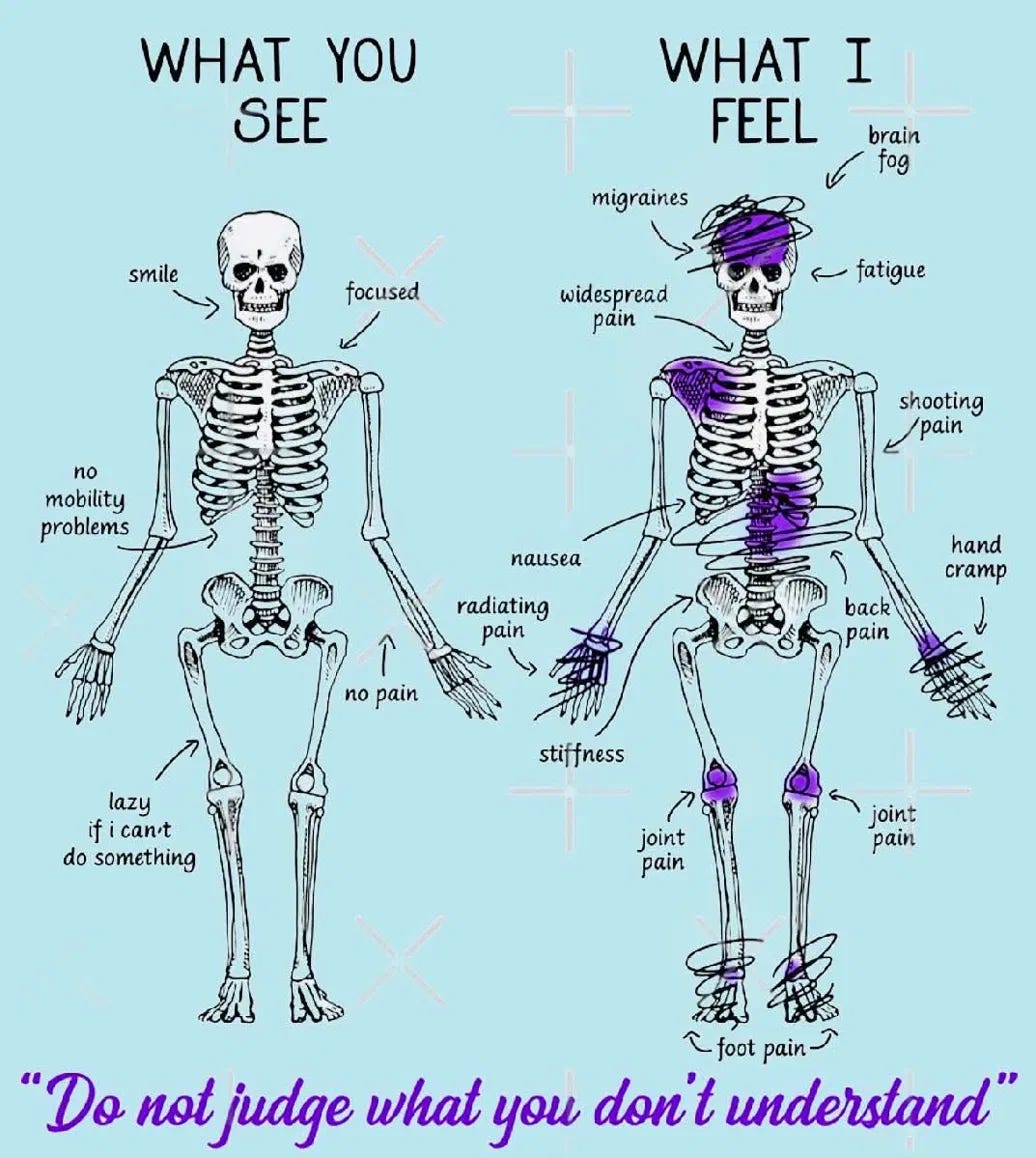
The Math That Doesn’t Work
I partnered with a disability job placement company. They couldn’t place me.
My neck is already documented at severe risk. My back is documented as disabled. Any sedentary role, the only category left once you remove standing, lifting, bending, kneeling, twisting, and repetitive hand use would accelerate both, faster than time would let them heal even if they could heal at all. If a company whose entire business is placing disabled people in jobs can’t find one for me, I don’t know who’s supposed to.
At my previous hearing, the judge laid out, on the record, what a job would have to look like for me to be able to work it: nothing requiring hand use, due to grip and joint issues. No heavy lifting, twisting, bending, or kneeling. No prolonged standing or sitting. A full extra hour of break time on top of standard breaks. And the acknowledgment that I would likely need to call off entirely after a full shift.
That was the court’s own description. Of a job that does not exist.
She denied anyway.
The lawyers dropped me afterward, not because the case was weak, but because I’m under 50, and they didn’t believe an appeal could succeed with that denial already on record at my age. It took me and a social worker more than ten calls to find anyone willing to take the appeal. One office, recommended by my own mental therapist, sent me next door to a lawyer who looked at the file and told me, plainly, that I was already as good as finished.
There’s a detail in all this that still hasn’t fully sunk in. I’ve been fighting for six years. But my lawyer explained that this appeal only goes back to my last hearing, not to when the fight actually started. So even after six years of trying, six years of documentation, six years of my body breaking down in real time, any back pay I’m eventually owed would only cover three. Going back further would mean appealing the entire prior judgment instead, which almost never goes well and risks losing ground I’ve already fought to hold. Rock, meet hard place.
Six years of proof. Three years of acknowledgment, if I win at all.
And there’s another clock running underneath all of this that most people have never heard of. It’s called your “date last insured,” and it comes from something called work credits.
Here’s how it works. Every quarter you work and pay into Social Security, you earn a credit. Most disability claims need forty of them, and it doesn’t matter that I’ve worked since I was sixteen, that I paid in for two decades before my body gave out. What matters is recency. If you stop working, the credits you already earned start expiring on a clock. About five years after you stop, in most cases, your insured status runs out, whether or not you’ve won your case yet.
I don’t know exactly where my own clock stands. I’m still finding that out. But I know enough to know this. It means there’s a version of this fight where you can be completely right, completely disabled, completely documented, and still lose the ability to even be considered, not because your body got better, but because too much time passed while you were busy proving it got worse. You can run out the clock just by surviving long enough to need the appeal in the first place.
That’s not a loophole. That’s not an oversight. That’s the same design as everything else in this piece. A system that only works for people who don’t need very much time to prove they’re broken.
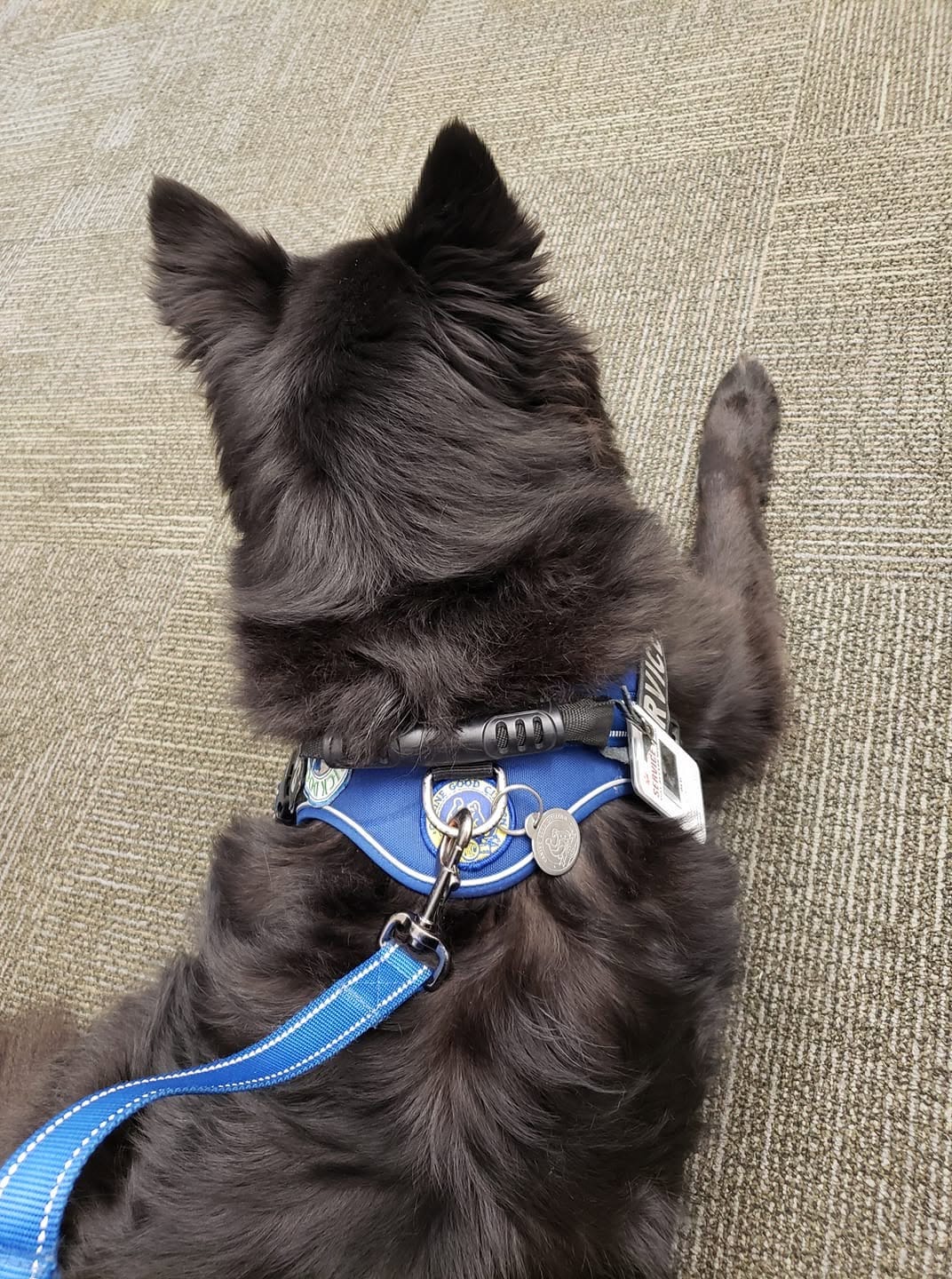
What Blu Knew First
Before any of this, before judges, before diagnoses had names, my last service dog, Blu, was already tracking the decline. He learned to brace and stand so I could pull myself up off the floor when I fell. He could feel me losing balance through a leash clipped to my waist before I felt it myself. He adjusted to what my body needed faster than any doctor did.
That’s its own story, and it deserves more room than a paragraph here can give it. Blu gets his own piece. Stay tuned.
The Public Cruelty
There’s a kind of exhaustion that doesn’t come from pain. It comes from being your own full-time advocate inside a system built to wear you down, while also being sick. I went over a year once without seeing a doctor, not because I didn’t need to, but because the appointments, the records, the constant explaining and re-explaining and being doubted had become a second unpaid job on top of survival. I needed a vacation from my own healthcare. Say that sentence out loud and hear how absurd it is.
And while people like me are doing this quietly, exhausted, trying, there’s a whole performance happening above us. Someone posts a photo of an unhoused person getting out of a car, captioned like a gotcha, as if living in a vehicle isn’t already homelessness, as if a cardboard sign isn’t allowed to be reused. Someone else says they don’t want “their” tax dollars funding a drink for someone sleeping outside, conveniently forgetting they crack open their own beer after a long shift, conveniently forgetting that we paid into these systems too, for years, specifically so they’d be there if we ever needed them.
That’s the part that gets me. It was never a handout. It was a paycheck deduction. It was the deal.
And right now, that deal is being broken on purpose, not through neglect, but through active policy, gutting the very systems we paid into, collapsing them from the inside while telling us we’re the ones being unreasonable for expecting them to work.
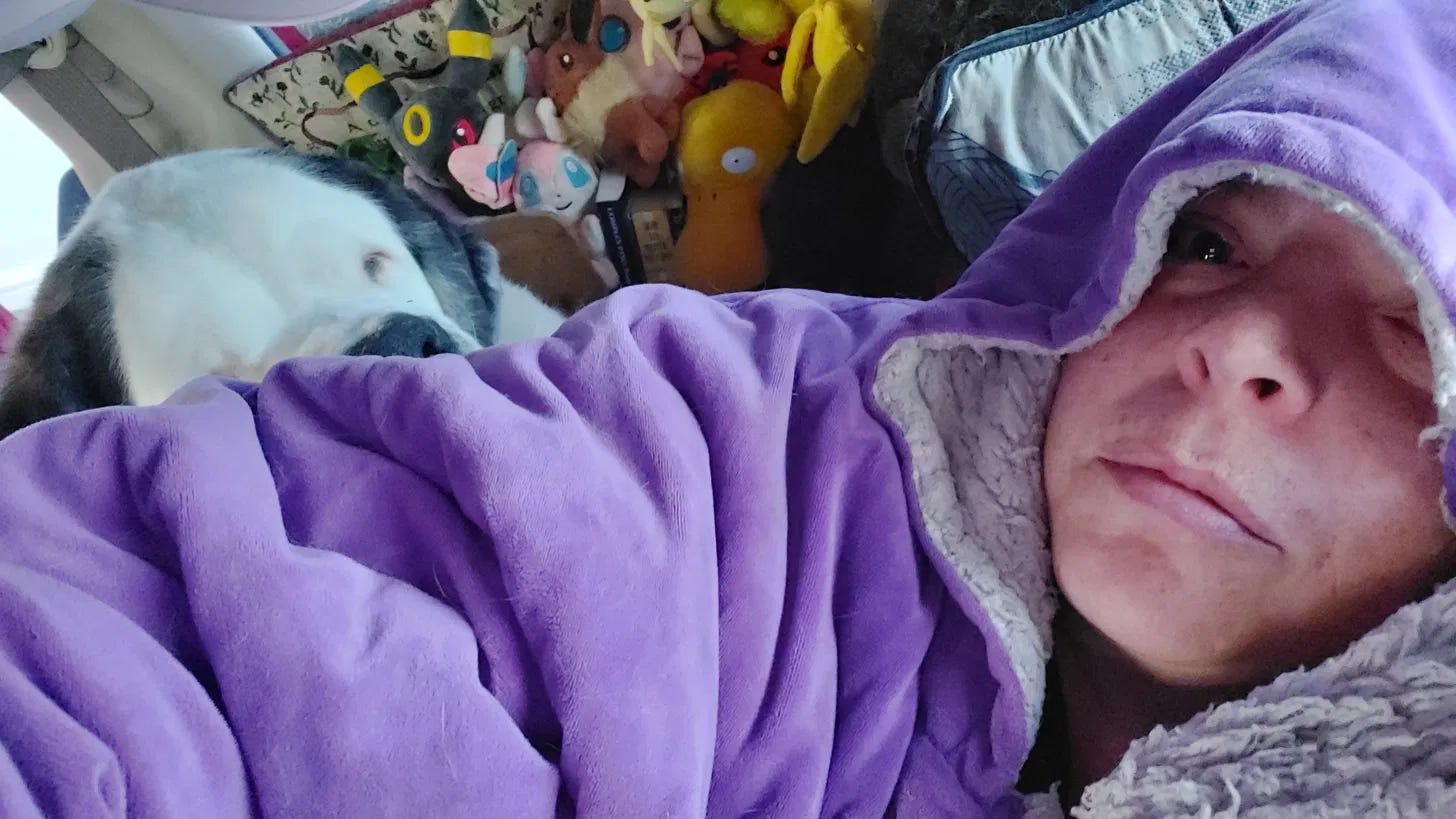
Effort Isn’t Infinite
I want to say this plainly, because I don’t think it gets said plainly enough: effort is not an infinite resource. Fight is not an infinite resource. You can refuse to give up and still run out of the physical capacity to keep proving it.
I’m still in the waiting game. Still don’t know if the system will finally give me what I spent my whole working life paying into. My body is chronic and degenerative, which means it only gets harder from here, not easier.
But I’m still fighting, on every front I have left in me.
It shouldn’t be this hard to get help in this country. Unless, apparently, you’re under 50, because somehow, here, disability comes with an age requirement nobody put in writing, but everybody enforces anyway.
A Note From Miss-Information
So the next time you pass someone on a corner holding a sign, sitting with a dog, existing somewhere that makes you uncomfortable, I want you to think about this. Think about six years. Think about 140 pages faxed after the hearing. Think about a judge who had time for one question, and chose the dog.
These safety nets have big holes. A lot of us fall through them. Not because we didn’t try hard enough, not because we didn’t fight, but because the holes are by design, and effort isn’t infinite, and the system knows that better than we do.
And that reality is only going to get worse. For a lot of us. For more of us than anyone wants to say out loud.
This one was personal. Thank you for following along, Miss-Fits. Shamrock and I feel every bit of your support, and on the days the tank runs low, it matters more than you know.