
What Does the Next Shift Look Like?
Apr 02, 2026
A continuing series on how politics are personal and what you can do by Miss-Information

A friend of mine once told me he doesn’t do politics.
I laughed. I couldn’t help it.
“You may not fuck with politics,” I told him, “but politics will always fuck with you.”
He didn’t have much to say to that. Most people don’t.
Because there is no opting out. There is only paying attention, or not paying attention while it happens to you anyway. The only difference is whether you see it coming.
Sometime early last year, a photo started making the rounds in demonstration groups on Facebook. An elderly woman. A walker with a handmade sign on it. A dog at her side. She was standing on a corner in her small town — a town that wasn’t organizing yet, wasn’t doing anything yet. So she did something anyway.
I don’t know her name. I don’t know what her sign said. But I know that photo stopped people mid-scroll. Because she wasn’t waiting for permission or a crowd or the right moment. She just showed up.
I’ve been that person too. More than once, honestly.
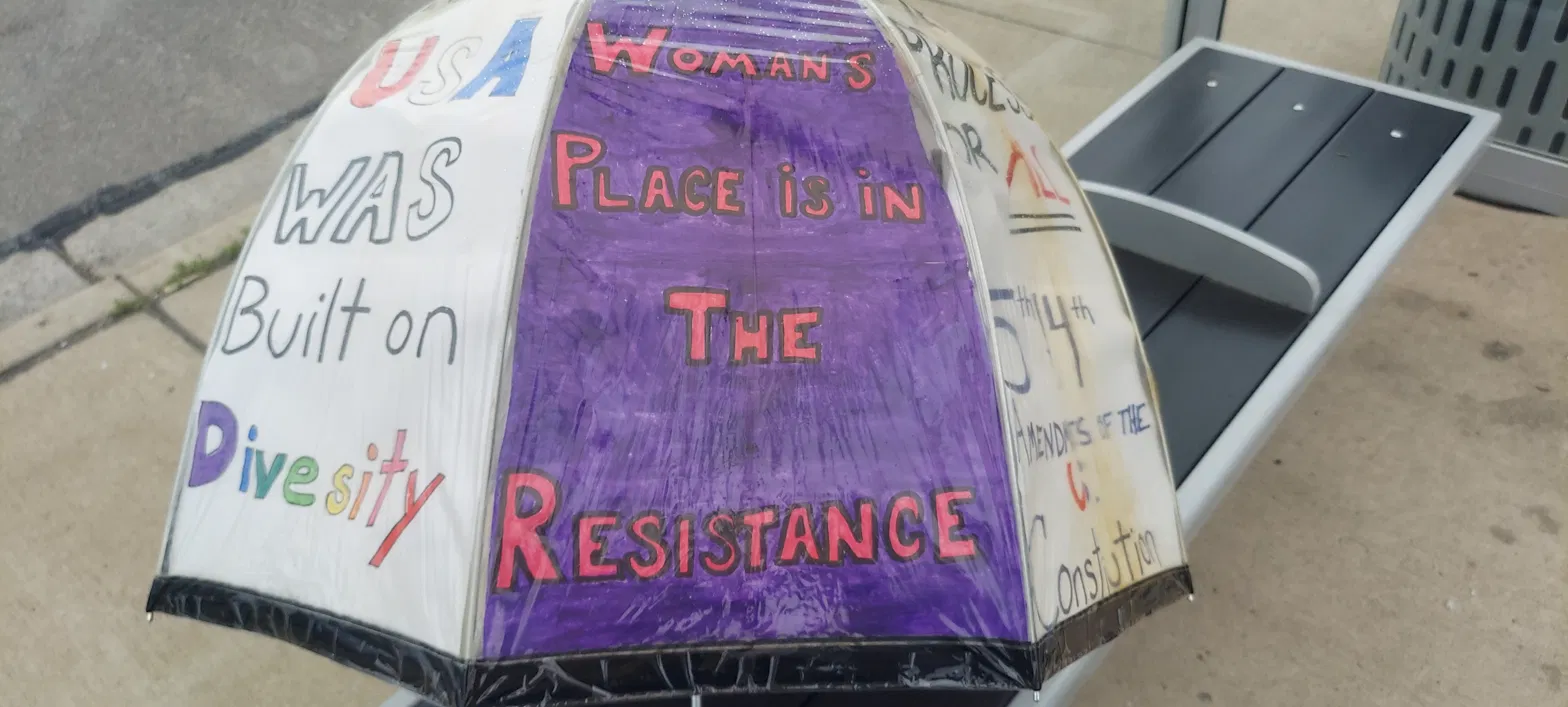
There was the time I ended up in front of John James’ office completely alone — a miscommunication, the demonstration had been moved further down the road after he started calling the cops on demonstrators out front. I didn’t know it had been moved. So I showed up where I always knew it to be. In the rain. With my demonstration cane and my umbrella — one of those big old fashioned clear ones, every panel lined with a different sign I’d made myself. Due process for all. The amendment. A woman’s place is in the resistance. A full rotating demonstration umbrella keeping me dry while I danced up and down that sidewalk by myself in front of his office.
I still got honks in support.
It happened again at a bridge demonstration. Same kind of mix-up, different location. I ended up on a pedestrian bridge over the same highway, just further down from where everyone else had landed. Just me and my signs.
But then someone came.
I don’t know if he saw me from the road or just ended up there the same way I did. Didn’t matter. I had an extra sign in my backpack — I always do — and I handed it to him. Two people on a bridge over a highway with signs became the demonstration.
That’s it. That’s the whole story. And somehow it’s also the whole argument.
Because here’s what both of those days taught me: showing up is never nothing. One person on a corner in a town that isn’t doing anything yet is still one person on a corner. One person dancing in the rain in front of a congressman’s office is still one person dancing in the rain in front of a congressman’s office. And two people on a bridge who found each other by accident are still two people on a bridge.
Presence is the message. Even when presence is just you.
I may have been one person. But that sparked someone else and we became two. And if we did this every day, two becomes four. Four becomes eight. That’s not a miracle. That’s not a moment. That’s how movements actually grow. We show up. We do the job.
This Is Why We’re Asking The Question

Why are we organizing heavily around the large scale moments and only the large scale moments?
Let me be clear about something first. The large scale moments matter. I’ve watched them grow with my own eyes. No Kings has broken the American record for largest demonstration turnout every single time — three times now. The numbers keep climbing and that is not nothing. That is everything. It shows we have the support. We have the numbers. And that scares them. And that fear brings more people out. The growth is real.
But we all know the 3.5% rule.
Research on historical movements tells us that no government has ever withstood sustained, nonviolent resistance once it reached 3.5% of the population actively participating. No Kings has surpassed that threshold. That is extraordinary.
The word there though is sustained.
Because a single day — even a record breaking one — is not sustained. And the nature of large scale mobilizations means they cannot be. You cannot ask millions of people to show up every day. Life doesn’t work that way. Bodies don’t work that way.
So we have the numbers. We have proven we have the numbers. Now we have to ask the harder question.
How do we make this sustainable?
This Is Who Is Showing Up — And Why
The people filling these large scale demonstrations right now are not the same people who filled those lunch counters. And I say that not as a criticism. I say it as an honest assessment of where we are.
A lot of people showing up today are doing so because politics finally touched them personally. And that contact is real and it matters. Welcome. Genuinely. We need you here.
But there is a difference between newly uncomfortable and always uncomfortable.
The communities who have always had the most skin in the game — Black and brown communities, LGBTQ+ communities, disabled people, unhoused people — have been on these front lines for decades. Long before the record breaking turnouts. Long before it became the thing to do on a Saturday. I have heard it said plainly in demonstration spaces by people of color: they are tired of taking the hits. And when you look at what is being aimed directly at the LGBTQ+ community right now, the fear in those spaces is not weakness. It is rational. They know they will absorb the worst of it if things escalate.
And then there are the people who show up in the biggest numbers at the local level. The elderly. The disabled. People who have the time and the will and the history but not always the bodies anymore.
So what we have is this: the most motivated are the most exhausted. The most physically able to absorb risk are the most comfortable. And the most comfortable people historically do not get uncomfortable enough to act until something touches them personally.
That is not an insult. That is just how it has always worked.
I’ve written about this before. If you haven’t read It’s Not Ironic, It’s By Design, I’d encourage you to. The short version is this: Americans aren’t failing to show up because they don’t care. They’re failing to show up because the system was deliberately built to make sure they couldn’t.
Union busting. Wage stagnation. No federally mandated paid leave. Healthcare tied to employment. Multiple jobs just to cover rent. That didn’t happen by accident. It happened by design. A population that is exhausted, indebted, and one missed paycheck from losing everything is a population that cannot walk off the job for weeks at a time the way French workers can. That is the point.
So when I look around at who is showing up most consistently at the local level it makes complete sense. Elders. Disabled people. Elder Millennials and Gen X who remember what this country looked like before it got this bad. Not because everyone else doesn’t care. Because everyone else is working two jobs, splitting rent four ways, trying to keep their heads above water for the first time as adults. Gen Z is showing up — you see them at the large scale events because those they can schedule around. The daily local presence is harder when you’re just trying to survive.
I am not shaming anyone. I am naming a system.
Because here is the thing: if we are serious about sustainability we cannot build a model that requires people to blow up their lives to participate. We tried that. It doesn’t hold.
We have to build something that works with the lives people are actually living. Something that fits into the margins. The lunch hour. The afternoon off. The two hours between shifts.
Something like a shift.

This Is What History Has Showed Us
To answer that we have to go back. We have to look honestly at the movements that did sustain. The Civil Rights movement. The Vietnam demonstrations. The union picket lines. The suffragists. And we have to ask not just what they did — but what they had on the line that made them do it every single day.
Because that’s the part we don’t talk about enough.
The people sitting at those lunch counters weren’t there because they had a free Saturday. They were there because segregation was already costing them everything. The risk of action was lower than the cost of doing nothing. That is a specific kind of fuel. The draft didn’t just motivate Vietnam era demonstrators — it made the comfortable uncomfortable involuntarily. Suddenly it wasn’t someone else’s war. It was yours. Your body. Your number.
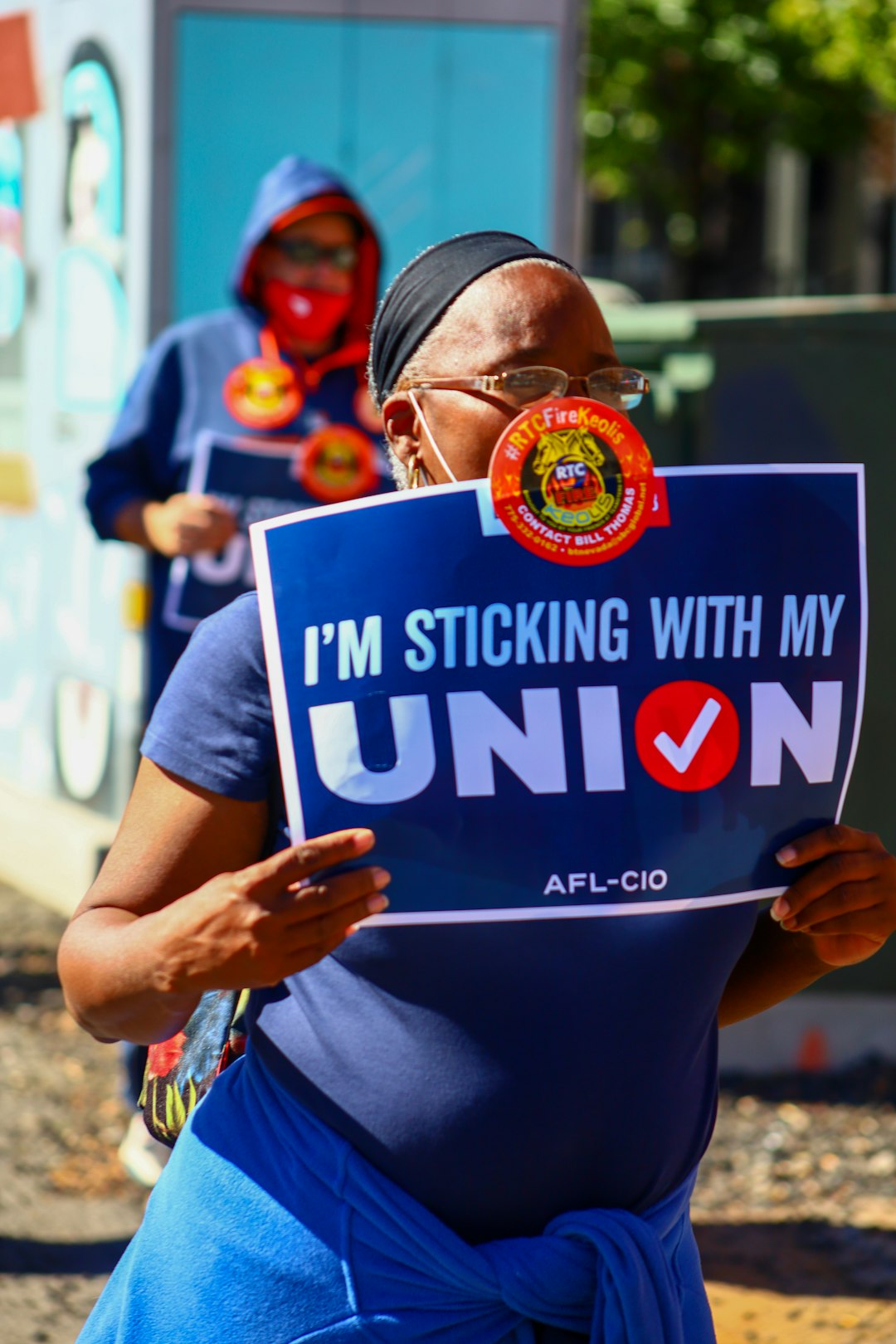
The unions had jobs on the line. Livelihoods. Families. They walked those picket lines in shifts — not because it was convenient but because the alternative was losing everything they’d built.
Skin in the game has always been the engine of sustainable movements.
This Is What Sustained Looks Like
We don’t have to imagine what this looks like. We don’t have to guess whether it works.
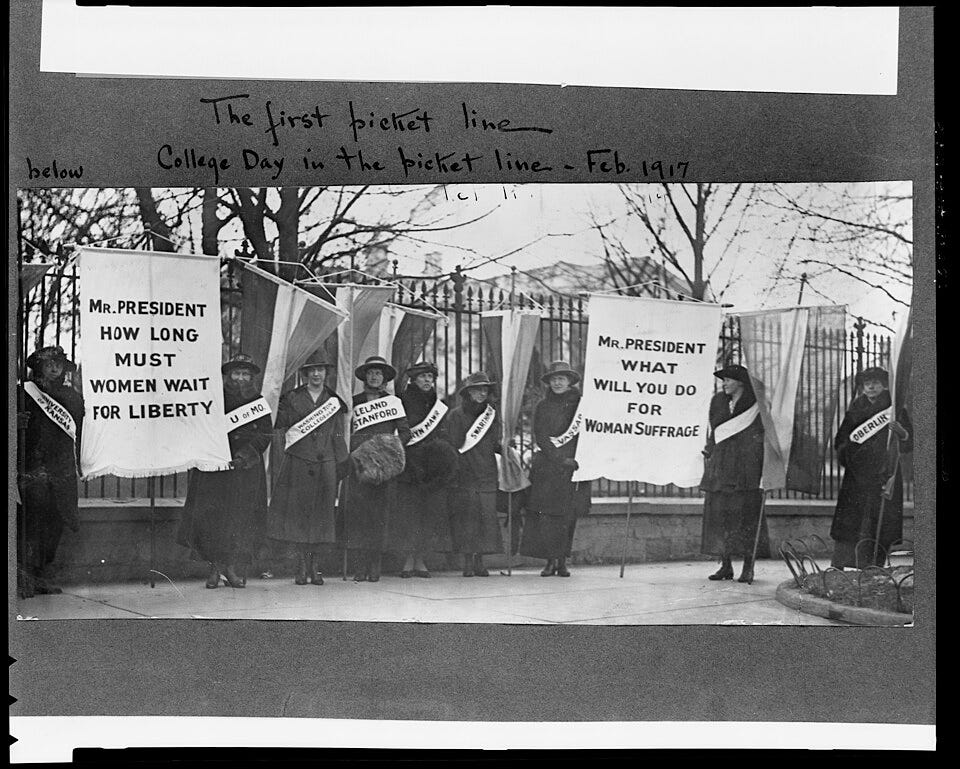
In 1917 the Silent Sentinels — suffragists from the National Woman’s Party — began picketing the White House. Every single day. Rain. Snow. Harassment from passersby. Eventual arrest. They stood on either side of that gate with their banners and when one woman was dragged away another stepped forward and took her place. Ready. Prepared. The next shift already there.
They did not wait for the right moment. They did not organize around a single dramatic day. They showed up every day until showing up became impossible to ignore.
They won the vote in 1920.
That is the model. That is exactly the model.
So what would this actually look like today?
It doesn’t require reinventing the wheel. It requires borrowing from what already worked and scaling it to where we are.
Pick a location. A congressman’s office. City hall. A federal building. A fixed, visible, publicly accessible point that means something in your community. Not just once. Permanently. That is your post.
Then you schedule it like a job.
Morning shift. Midday shift. Afternoon shift. Evening shift. Two to three hour blocks. Whatever your organization can sustain. You post the schedule. You fill the slots. And if you can only fill one slot on a Tuesday that’s one slot on a Tuesday. That is still one person on a corner. We already know what that can become.
Organizations like Indivisible already have district specific chapters. 50501 already has daily state level actions. The infrastructure exists. What we are proposing is not a new organization. It is a new operating model layered onto what is already being built.
And critically — this is not a replacement for the large scale mobilizations. No Kings keeps growing and those numbers matter. Those days of record turnout send a message that cannot be ignored. But between those moments? The post stays staffed. The presence doesn’t disappear. We don’t give them the silence they are counting on between our loudest days.
Because here is what sustained presence does that a single rally cannot. It normalizes resistance. It makes it visible on a Wednesday morning when the cameras aren’t there. It says we are not going anywhere. Not just on the days it’s easy. Every day.
That is what they are afraid of.
This Is How We Build It
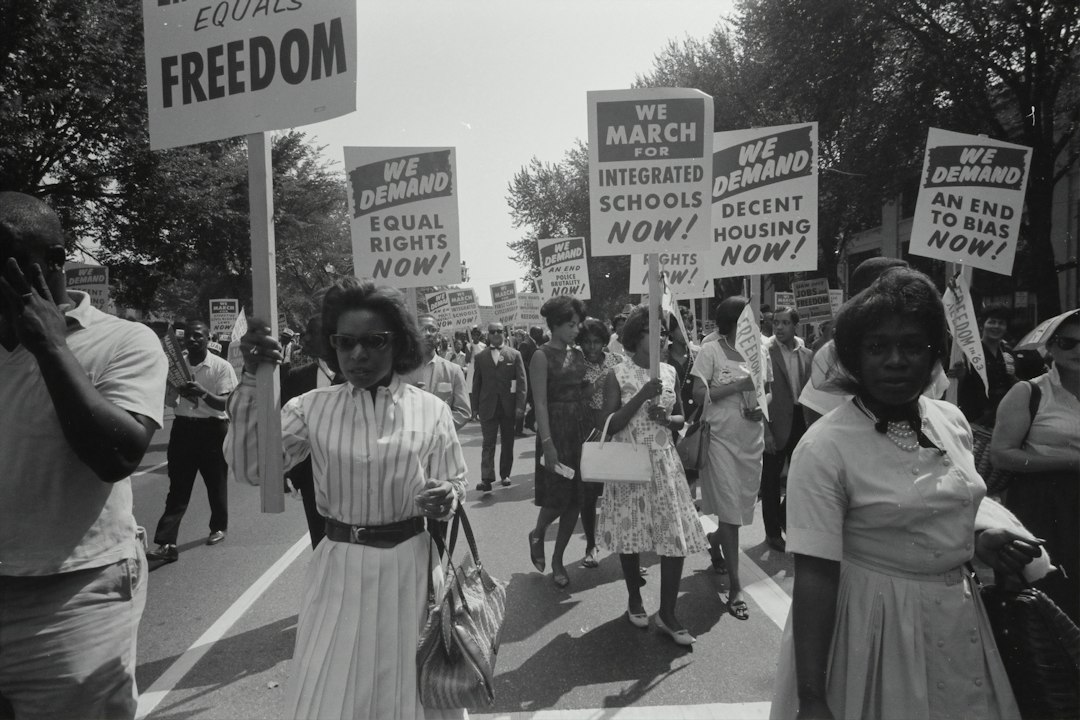
The Civil Rights movement didn’t just have brave people. It had infrastructure. Lawyers on call. Bail funds. Safe houses. Training. People who knew exactly what to do the moment things went sideways. That preparation is what made the bravery sustainable.
If we are serious about this model we have to build the same thing. Here is what that looks like:
Know Your Rights Training
Every person who takes a shift should know their legal rights before they ever pick up a sign. What is protected. What is not. What to say and what not to say if approached by law enforcement. What to do if someone in your shift gets detained. This is not optional. This is the baseline. For a full breakdown of what the Constitution actually protects and how to document safely, read What the Constitution Actually Says — and Why Watching Still Matters.
Legal Support Networks
Every demonstration location needs a legal contact. A lawyer or legal organization on call who knows what you are doing, where you are, and can respond if needed. The National Lawyers Guild has done this work for decades. Your local ACLU chapter is a starting point. You build that relationship before you need it not after.
Documentation Teams
Someone on every shift whose specific job is to record. Not to demonstrate. To document. Phones up. Badge numbers noted. Interactions logged. When they start trying to make the watching illegal you know the watching is working.
Buddy Systems and Check Ins
No one on a shift should be completely alone without someone knowing where they are. A check in system. A text when you arrive and when you leave. Simple. Scalable. It costs nothing and it matters.
Bail Funds and Legal Defense
If your organization is serious about this model it needs a legal defense fund. Even a small one. People are more willing to put themselves on the line when they know there is a net. The Civil Rights movement knew this. The suffragists knew this. We need to know it too.
Safe Harbor Networks
For those whose participation could put them at elevated risk — undocumented community members, trans demonstrators, others who are specific targets right now — a safe harbor network means having people and places ready to provide support, transportation, or shelter if a situation escalates. This is mutual aid as movement infrastructure.
The Shift Schedule Itself
Treat it like a community calendar. Post it publicly within your organization. Make signing up for a slot as easy as signing up for a volunteer shift at a food bank. Two to three hour blocks. Recurring weekly commitments encouraged but not required. Show people that one lunch hour counts. Because it does.
Supply Sharing
Extra signs in your backpack. A spare marker. Water. Sunscreen. Hand warmers in winter. The person who shows up unprepared gets what you brought extra. That is how two people on a bridge becomes a demonstration.
The thing Lewis always said that gets underplayed: they weren’t just brave, they were prepared. The preparation was the discipline.
This Is Our Good Trouble
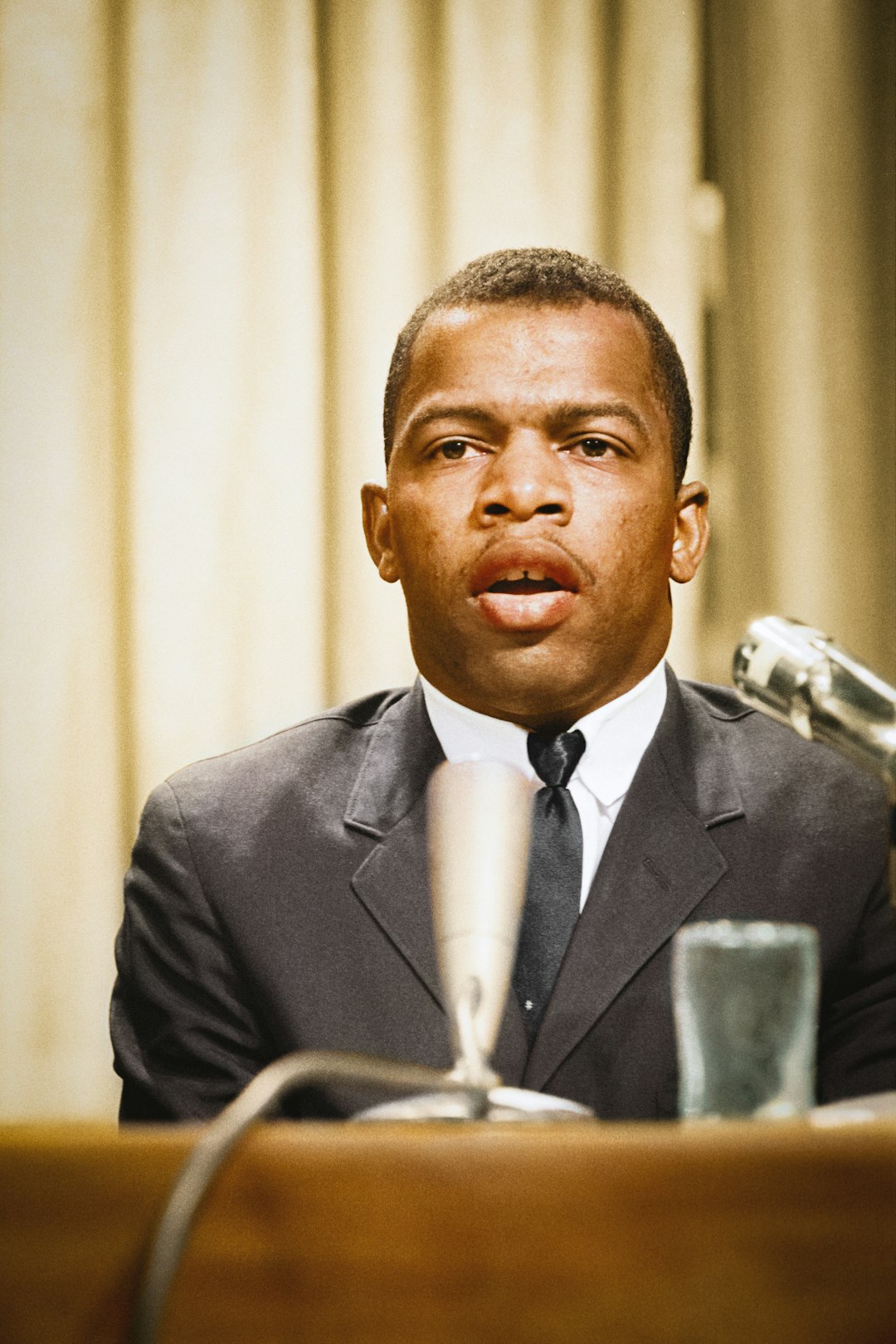
So. What is our good trouble?
What is our unjust law?
I asked that question at the end of our last meeting. And here is where I landed.
Our unjust laws are not new. They are the laws already being broken. No warrants. No due process. Civil infractions treated as criminal offenses. The illegality is theirs. And so our act of resistance — our good trouble — is refusing to let them reframe legal, protected activity as wrong. Showing up. Watching. Documenting. Persisting.
Legal observation is our lunch counter.
The shift is our picket line.
The corner where one person stands with a walker and a dog and a handmade sign in a town that isn’t doing anything yet — that is our White House gate.
We don’t need to wait for the perfect moment or the perfect number or the perfect conditions. The Silent Sentinels didn’t wait. The union workers didn’t wait. The people who sat at those lunch counters didn’t wait. They showed up with what they had, where they were, and they kept showing up until showing up became impossible to ignore.
We already have the numbers. No Kings has proved that three times now. The record keeps breaking because people keep waking up and realizing what I told my friend a long time ago — you may not fuck with politics, but politics will always fuck with you.
Now we have to make those numbers sustainable. We have to build the infrastructure. Train for it. Schedule it. Staff it like the job it is.
Because this is a marathon not a sprint. And the people who understood that — the ones who built the bail funds and the legal networks and the safe houses and the rotation schedules — those are the people history remembers as the reason it worked.
So here is what I am asking.
Find your location. Find your organization. Sign up for a shift. Bring an extra sign in your backpack. Know your rights before you go. Have a lawyer’s number in your phone. Check in when you arrive and when you leave.
And show up.
In the rain if you have to. Alone if you have to. Dancing on a sidewalk in front of a congressman’s office with a demonstration umbrella if you have to.
You will still get honks in support.
We do this together, in shifts, one slot at a time, until they cannot ignore us on a Tuesday at noon any more than they can ignore us on a Saturday with millions.
That is the model.
That is the next shift.
Now let’s make this happen and spread the word. We can do this.
We will not be comfortable and we will not be complacent.
Thanks for reading Miss-Information! This post is public so feel free to share it.
Writers note:
I hope this helps spark ideas, helps start conversations on what our next steps can be and can look like, and helps this movement keep growing and becoming even stronger.
That is my goal with this piece, as it is with all of my pieces. To help while I am unhoused, disabled, in my van with my service dog in one of the few ways I still can, with my words and my voice and my mind.
Thank you as always fellow Miss-Fits for joining me on this journey.
*all photos provided by free open source options, already shared social media photos, my own personal photos or via the unsplash options.