
What’s Getting Lost to Time and Modernization (Part 1 of 2)
4 hours ago

I spent three months in Arkansas once, and by the end of it my own vowels had started sliding around without my permission. Nobody told them to. They just went. That’s the thing about accents that most people never think about until it happens to them: they’re not a costume you put on, they’re something that happens to you, shaped by whoever is around you long enough.
I think about this more than the average person because of what’s sitting in my own family tree. Belgian both sides, Indigenous Canadian, Indigenous American, (Niitsitapi, Chippewa), French-Spanish Louisiana Creole on another, One of my 3x great-grandfathers was nicknamed “The Great Creole” and “The Creole Prince,” partly for his aristocratic manner, but partly, and this is the part I love, because of how much he loved the language itself. Meanwhile I sat in ninth grade French class butchering my accent so badly my teacher told me I sounded too Spanish, that I was mixing the two languages together without realizing it. I still confuse my counting between French and Spanish to this day. And what I sound like now, after all that ancestry and all that travel, is a mixed up midwesterner with a few weird inflections nobody can quite place. No trace of Creole. No trace of Belgium. Just whatever’s left after a few generations of moving around and a media culture that keeps sanding everybody’s edges down to the same shape.
That’s the real subject of this piece. Not just how American accents formed, but what we’re actively losing right now, while it’s still happening, and why. And underneath all of it sits a question people don’t like to sit with: if you told every one of these voices to “just assimilate,” to “just speak American,” what exactly would be left standing?
The Melting Pot Origin
Every regional accent in America starts the same way: a group of people from somewhere else lands in one place, keeps mostly to itself for a few generations, and the isolation does the rest. Appalachia got its cadence from Scots-Irish settlers out of Ulster. The Upper Midwest got its flattened vowels and its “yah” from Scandinavian and German immigrants. The Deep South is a collision of Elizabethan-era English settlers, those same Scots-Irish backcountry families, and, critically, the enslaved Africans who often did the actual day to day raising of white Southern children, which means the roots of the Southern drawl run directly through those relationships whether that gets acknowledged or not.
Say “just speak English” to any of that and you’re not asking someone to drop an accent. You’re asking them to erase the specific collision of people that produced the only English you yourself grew up speaking. There is no version of “American” underneath the immigration. It’s immigration all the way down.
For most of American history, isolation held. People didn’t move much, and they definitely didn’t hear voices from six states away on a daily basis. Now they do, constantly, and that’s the hinge this whole piece turns on.
The Ones Vanishing Right Now
Tangier Island and the Hoi Toider Accent
Out in the Chesapeake Bay sits Tangier Island, home to one of the strangest surviving accents in the country, a blend some islanders describe as part Southern, part Elizabethan English, sometimes compared to Cornish. It’s called Hoi Toider, after the way locals pronounce “high tider.” The island has been isolated long enough that families with the same surnames, Crockett, Parks, Thomas, have lived there for generations without much new blood or new speech patterns coming in.
Here’s what makes this one urgent instead of just quaint: the island is disappearing. It’s lost two thirds of its landmass since 1850. Researchers who’ve studied it for years estimate it may need to be fully abandoned within twenty five to thirty years, between rising seas, worsening storms, and the fact that the whole Chesapeake Bay region is tectonically sinking on top of everything else. This isn’t an accent that will slowly blend into the mainland over a few generations. It’s an accent that will lose its home out from under it. When Tangier goes underwater, Hoi Toider goes with it, and no amount of “just adapt” will bring it back.
Louisiana Cajun French and Creole
This one isn’t a slow fade, it’s the direct result of policy. Louisiana’s 1921 state constitution banned French from school property outright, on top of an earlier 1910 law. Cajun and Creole children were punished, humiliated in front of their classmates, in some cases whipped, for speaking the only language they knew at home. The ban held until the 1970s. Parents, watching what their kids went through, simply stopped teaching them French rather than send them into that. That’s how you lose a language in two generations: not because nobody wanted to keep it, but because keeping it hurt.
There’s a real revival happening now, immersion schools like École Pointe au Chien teaching Cajun French to a new generation, CODOFIL (The Council for the Development of French in Louisiana)working on it since the late sixties. It’s not too late for this one. But it came within a couple generations of being gone entirely, on purpose, by people who called it patriotism.
Native American Languages
Same story, bigger and older. Between the 1870s and the 1960s and 70s, the federal government ran boarding schools built around the explicit motto “kill the Indian, save the man.” Children were taken from their families, had their hair cut, were renamed, and were beaten for speaking their own languages. A 2022 federal report tied over five hundred documented child deaths to the system, and researchers believe the real number is higher. Of an estimated three hundred plus Indigenous languages once spoken in what’s now the United States, roughly a hundred seventy five remain.
That number, three hundred down to a hundred seventy five, is the starkest one in this whole piece. It’s not metaphorical loss. It’s just loss, and it happened under the same logic people still use today: assimilate, or else.
Gullah Geechee
Along the Sea Islands of the Carolinas, Georgia, and coastal Florida, Gullah developed as a full creole language among enslaved West and Central Africans, built from English mixed with Niger Congo and Bantu language elements. It’s not broken English, it’s its own grammatically complete system, and it gave mainstream American English words most people use without knowing where they came from: gumbo, goober, yam, Bubba. The isolation of the Sea Islands meant it survived far more intact than most creoles managed to. It’s still spoken today, still being taught, including by instructors now bringing it into university classrooms like Harvard. Every time someone uses one of those words without knowing where it came from, that’s the immigration argument making itself, whether anyone notices or not.
The Ones Still Shifting
Not every accent on this list was suppressed on purpose. Some are just doing what language always does when people move around and technology speeds everything up. But a few of these were pushed just as hard as anything above, they’ve just survived it more visibly.
Northern Cities Vowel Shift vs. Canadian Raising
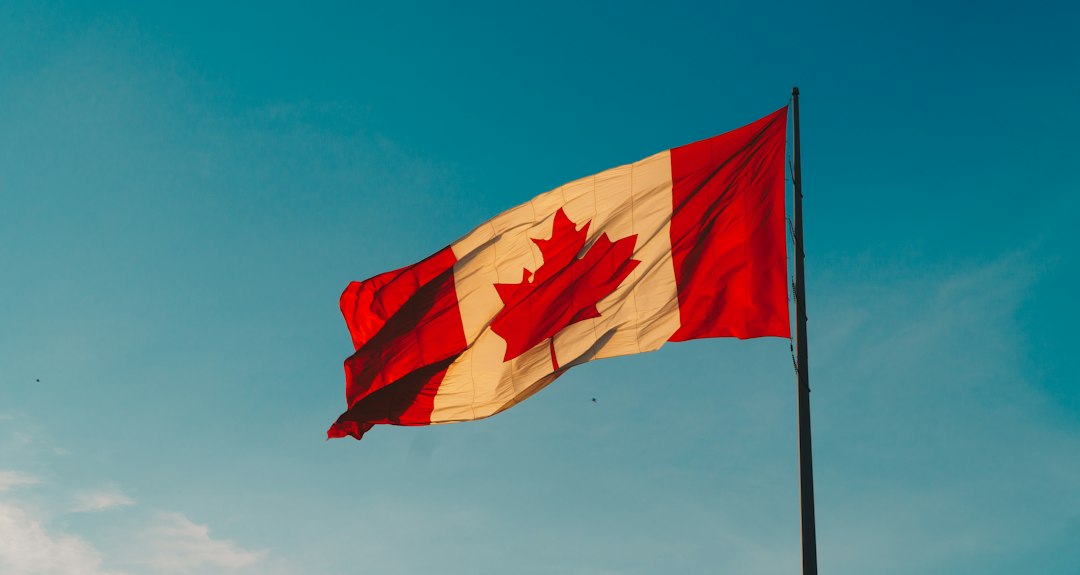
Drive from Detroit into Windsor, Ontario, and you cross an accent border sharper than almost anywhere else in North America, despite tens of thousands of people crossing that bridge every single day for work. On the American side, the Northern Cities Vowel Shift is pushing vowels through a rotating chain, the short A in “trap” rising, the “o” in “lot” moving forward. On the Canadian side, Canadian Raising is doing something narrower and completely different, raising the “i” in “price” and the “ou” in “mouth” before certain consonants, which is the actual mechanism behind the “aboot” stereotype and the reason a Canadian’s “writer” and “rider” genuinely don’t rhyme. Two accents evolving in opposite directions on either side of a river people drive across every day, no assimilation involved, just proof that isolation still works even at a distance of a few hundred feet.
Boston
Boston’s dropped R isn’t one story, it’s two. The old money Brahmin accent went non-rhotic to imitate British Received Pronunciation, an aspirational move. The working class Southie accent is non-rhotic too, but got there through completely different social history. Same surface feature, opposite class stories underneath it, and it’s why “pahk the cah in Hahvahd Yahd” reads as comic coming out of one mouth and patrician out of the other. There’s also a real, if disputed, theory that Boston didn’t inherit r dropping from England at all, that Bostonians started dropping the R first and it spread back across the Atlantic. Even the theory that flatters Boston most still runs straight through Britain.
AAVE
African American Vernacular English is fully rule governed, with its own grammar, its own aspect markers, its own systematic logic, not “broken” anything. Its exact origins are contested among linguists, some argue it’s a decreolized plantation creole with West African roots, others argue it developed from the same British Isles dialects, including Ulster Scots, that shaped white Southern speech in the same period. Either way, it’s been stigmatized for exactly the same reason Cajun French and Gullah were stigmatized: an association with people society decided didn’t count as speaking “correctly.” “Speak properly” has never been a neutral request. It’s always been aimed at somebody in particular.
Alaska
Alaska’s accent doesn’t have one root because Alaska doesn’t have one settlement story. It’s Pacific Northwest and Western Canadian influence layered with more recent Midwestern transplants, plus real Canadian Raising showing up in the mix, plus, in remote village communities, direct influence from Indigenous languages. When Sarah Palin got compared to a “Fargo” accent, linguists pushed back and pointed out she’s got a genuine Matanuska Susitna Valley accent, not an Upper Midwest one. The confusion makes sense, though, because the two really do share ancestry, which is itself the whole point: nobody in this country sounds like they do without three or four other places lending them the parts.
California, Valley Girl, and the Surfer Sound
I lived through this one. I remember the Valley Girl sound and the surfer lingo both being genuinely how people talked, not just something from a movie, and I remember watching them get flattened into caricature on screen until the caricature became the only thing anybody remembers. Valspeak came out of the San Fernando Valley in the late seventies and early eighties among affluent teenage girls, went national through Zappa’s 1982 song, and got a second wind through “Clueless” in the nineties, which was itself already treating it as a period piece. The vocabulary died fast, nobody says “grody to the max” anymore except as a joke. But the underlying features, uptalk and vocal fry, spread out into the wider language and are still here, completely unremarked on now, in people who have no idea where either one came from. It’s the mildest version of the same pattern: something regional and specific gets mocked, then gets absorbed anyway.
The Transatlantic Accent
Old Hollywood’s Mid-Atlantic accent might be the strangest one in American history because nobody ever actually spoke it as a native tongue. It was taught, deliberately, in acting schools and finishing schools, engineered to sound vaguely upper class and vaguely trans-Atlantic without being placeable anywhere specific. It died with the studio system that manufactured it. It’s the clearest example in this whole piece of an accent that was never organic in the first place, built top down instead of growing up out of a place, proof that even the fantasy of a placeless, accentless American voice had to be manufactured. It never existed on its own.

What’s Actually Doing the Flattening
Every thread in this piece points at the same two forces. Mobility, because people don’t stay in one place long enough anymore for isolation to do its slow work of preserving anything. And media, because everyone is hearing the same handful of broadcast voices constantly, which means regional speech has to compete against a leveling force it never had to compete against before.
None of what’s disappearing here disappeared naturally. Some of it was beaten out of children on purpose. Some of it is losing the literal ground it stands on. Some of it is just being worn down by convenience and by phones. But all of it is a record of who settled where, who was in contact with whom, who had power and who didn’t, and what people held onto anyway.
The people working right now to teach Cajun French to second graders, to keep Gullah alive in a Harvard classroom, to document a Native language before its last fluent speakers are gone, they’re not doing a nostalgia project. They’re doing the same thing my family did without knowing it when a 3x great-grandfather earned himself a nickname for loving a language enough that people noticed. They’re just doing it on purpose, and in time.
So the next time someone tells an immigrant, or a Cajun kid, or a kid on a reservation, to just assimilate, to just speak American, ask them what they think that even means. Every vowel in this country came from somewhere else first. Even the language you’d be telling them to speak instead isn’t American without immigration. Nothing here is.
(END OF PART 1) Part 2 will be covering other countries. Stay tuned.